
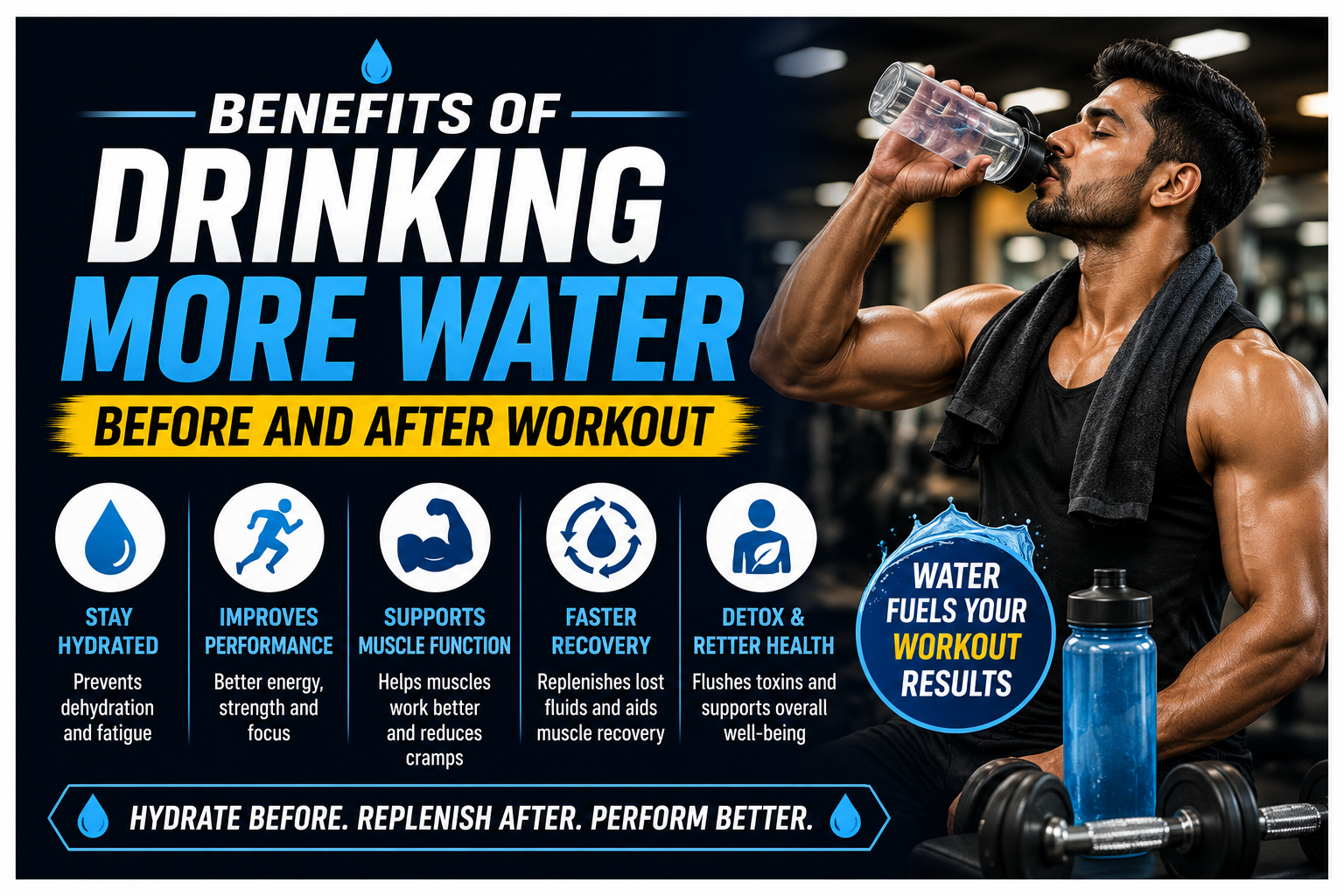
Water is one of the most important parts of fitness and health.
Many people focus on exercise and diet but forget the importance of drinking enough water.
During workout, the body loses water through sweat. If you do not drink enough water, the body becomes dehydrated and workout performance becomes weaker.
Drinking water before and after workout helps improve energy, strength, and recovery.
In this article, we will understand why staying hydrated is important for better fitness results.
Why Water is Important for the Body
The human body is made mostly of water.
Water helps with:
- Digestion
- Blood circulation
- Body temperature control
- Muscle function
- Energy production
- Removing toxins from the body
Without enough water, the body cannot work properly.
Why Drink Water Before Workout?
Drinking water before exercise prepares the body for physical activity.
It helps maintain energy and prevents dehydration.
1. Improves Energy Levels
The body needs water to perform properly.
If water levels are low, you may feel tired quickly.
Drinking water before workout helps maintain energy.
This allows better exercise performance.
2. Prevents Dehydration
Sweating during workout causes water loss.
Starting exercise without enough water increases dehydration risk.
Dehydration can cause:
- Weakness
- Dizziness
- Headache
- Low energy
Proper hydration keeps the body balanced.
3. Helps Better Muscle Performance
Muscles need proper hydration to function correctly.
Low water levels can cause:
- Muscle cramps
- Weak performance
- Faster tiredness
Water helps muscles work smoothly.
Why Drink Water After Workout?
After exercise, the body loses fluids through sweat.
Water helps restore balance.
4. Helps Faster Recovery
Workout creates stress inside muscles.
Drinking water helps muscles recover faster.
It helps transport nutrients throughout the body.
This improves recovery speed.
5. Maintains Body Temperature
Exercise increases body heat.
Water helps cool the body naturally.
This keeps body temperature normal after workout.
6. Removes Toxins From Body
Sweating removes waste from the body.
Drinking water helps flush toxins naturally.
This supports better overall health.
7. Reduces Muscle Cramps
Low hydration can cause muscle cramps.
Water helps muscles stay relaxed and flexible.
This reduces chances of cramping.
8. Supports Better Fat Loss
Drinking enough water helps metabolism work better.
Good hydration can support:
- Better digestion
- Better calorie burning
- Reduced unnecessary hunger
Water indirectly supports weight loss goals.
How Much Water Should You Drink?
General recommendation:
- Drink water 30 minutes before workout
- Drink small amounts during workout
- Drink enough water after workout
Daily water intake depends on activity level.
Most adults should drink enough water throughout the day.
Signs You Need More Water
Your body gives warning signs.
Common signs:
- Dry mouth
- Feeling tired
- Headache
- Dark urine color
- Muscle cramps
- Low energy during workout
These signs show dehydration.
Simple Tips to Stay Hydrated
- Carry water bottle daily
- Drink water after waking up
- Drink before exercise
- Drink after workout
- Eat fruits with water content
- Do not wait until feeling thirsty
Small habits improve hydration.
Final Thoughts
Water is a very important part of fitness.
Without enough water, the body cannot perform properly.
Drinking water before workout helps improve energy and prevent dehydration.
Drinking water after workout helps recovery and muscle function.
If you want better fitness results, never ignore proper hydration.
Exercise, nutrition, sleep, and water all work together for better health.
FAQs
Why should I drink water before workout?
It helps improve energy and prevents dehydration.
Why is water important after workout?
It helps recovery and restores lost fluids.
Can dehydration affect exercise performance?
Yes, dehydration causes weakness and low energy.
Does water help muscle recovery?
Yes, water helps transport nutrients and improve recovery.
Can drinking water help weight loss?
Yes, proper hydration supports metabolism and digestion.
Leave a Reply