
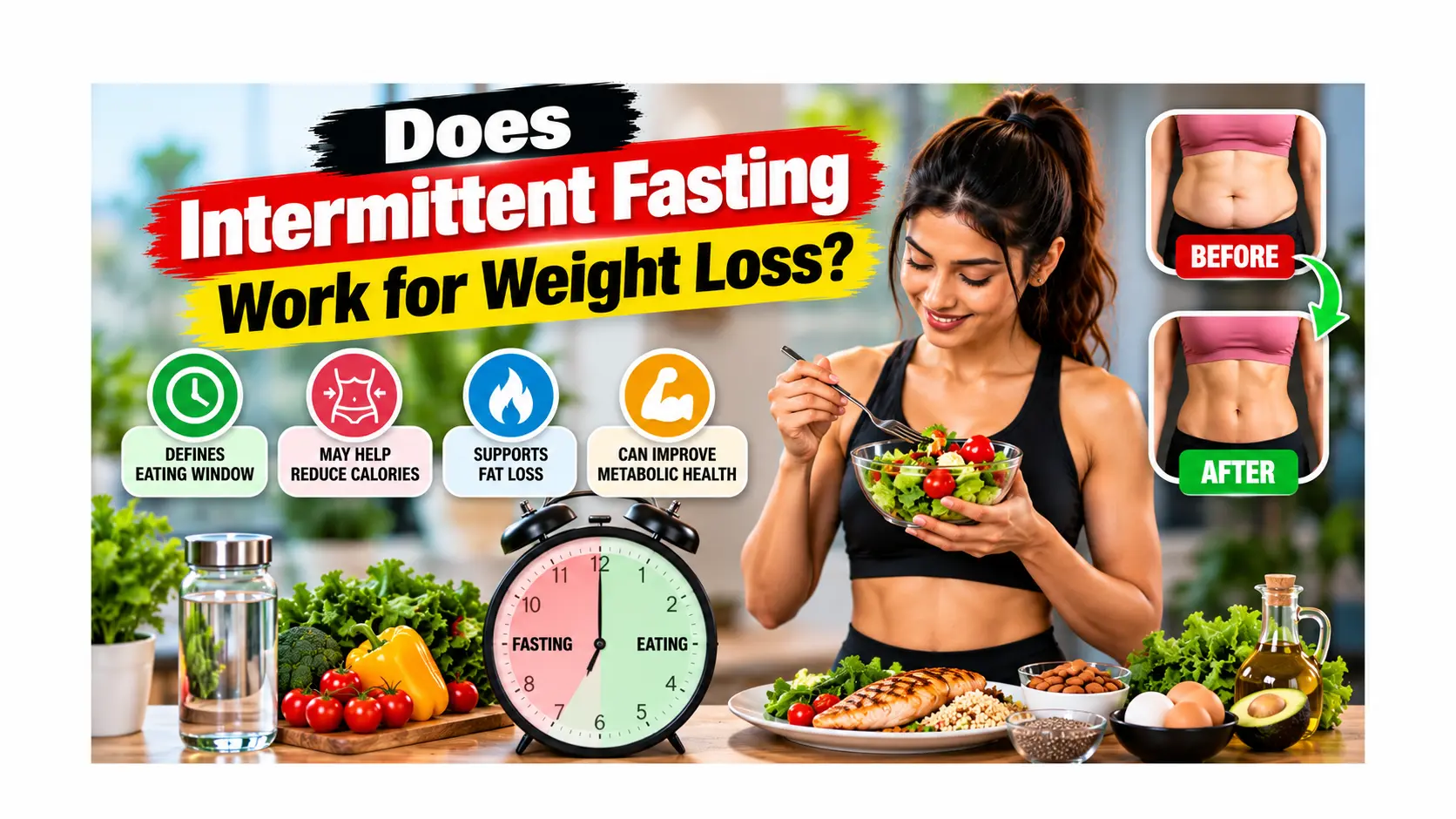
Intermittent fasting has become a popular approach for people who want to lose weight and improve their eating habits. Many people follow it because it does not require them to remove rice, roti, fruits or other favourite foods completely. Instead, it focuses mainly on when you eat rather than only on what you eat.
But does intermittent fasting for weight loss really work? Can you lose belly fat with it? Is it better than a normal calorie-controlled diet?
The simple answer is yes, intermittent fasting can help with weight loss, but it is not a magic solution. It works for many people because it can make it easier to reduce overall calorie intake. However, it is not necessarily more effective than other eating plans that create a similar calorie deficit.
In this guide, we will explain how intermittent fasting works, its benefits, common methods, possible disadvantages and how to approach it safely.
What Is Intermittent Fasting?
Intermittent fasting is an eating pattern in which you alternate between periods of eating and periods of fasting. During the fasting period, you avoid food and consume permitted zero-calorie drinks, such as water or plain tea, depending on the method you follow.
Unlike some diets, intermittent fasting does not automatically tell you which foods to eat. You can still choose a balanced diet that includes protein, carbohydrates, healthy fats, fruits and vegetables.
The most important thing to understand is that intermittent fasting does not automatically cause weight loss. You still need an eating pattern that supports your energy needs and fitness goals.
For example, if you fast for 16 hours but eat more calories than your body uses during the remaining eight hours, you may not lose weight.
3. Popular Types of Intermittent Fasting
There are several ways to follow intermittent fasting. You should choose an approach that fits your daily routine rather than forcing yourself to follow the strictest schedule.
16:8 Intermittent Fasting
This is one of the most popular methods.
You fast for 16 hours and eat during an eight-hour window.
For example:
- 12 PM: First meal
- 3 PM: Snack or light meal
- 7:30 PM: Dinner
- 8 PM to 12 PM the next day: Fasting period
The times can be adjusted to suit your schedule. You do not need to skip breakfast if another eating window works better for you.
14:10 Intermittent Fasting
With this method, you fast for 14 hours and eat during a 10-hour window.
For example, you might eat between 9 AM and 7 PM.
This can be a less restrictive option for people who find a 16-hour fast difficult.
The 5:2 Method
With this approach, people eat normally on five days of the week and substantially reduce calorie intake on two non-consecutive days.
This method is more demanding than simply setting an eating window. It may not be suitable for everyone, and very low calorie intake should not be attempted without appropriate professional guidance.
For beginners, a regular overnight fasting period or a flexible 14:10 schedule may be easier to manage than a strict fasting plan. You do not have to fast for 16 hours to lose weight.
4. How Does Intermittent Fasting Help With Weight Loss?
The main benefit is that it can make eating less easier for some people.
For example, if you usually eat late-night snacks, extending the overnight period without food may help you reduce those extra calories.
Intermittent fasting may also give you a simple routine because you have fewer hours in which to plan meals and snacks.
However, research shows that intermittent fasting generally produces weight-loss results similar to continuous calorie restriction. It is an alternative way to manage food intake, not a guaranteed shortcut.
Remember these three points:
- You still need to manage your overall food intake.
- Eating nutritious foods helps you meet your nutritional needs.
- Your results depend on consistency and whether the plan suits your lifestyle.
5. What Should You Eat During Your Eating Window?
When following intermittent fasting for weight loss, avoid using your eating window as an excuse to eat unlimited amounts of food.
Instead, focus on balanced meals that help you feel satisfied and support your health.

Protein-rich foods
Include eggs, paneer, curd, chicken, fish, tofu, soy chunks, dal and beans. Protein helps maintain muscle while losing weight.

Carbohydrates and whole grains
Rice, roti, oats, potatoes and other carbohydrate foods can fit into a weight-loss diet. Pay attention to portions and overall calories.

Fruits and vegetables
These provide fibre, vitamins and minerals. They can also help make meals more filling.

Healthy fats
Nuts, seeds and suitable oils can be part of a balanced diet. Keep portions sensible because fats are calorie-dense.
You do not need to remove Indian foods such as rice, roti or dal. A balanced diet with appropriate portions can work well with intermittent fasting.
6. Can Intermittent Fasting Reduce Belly Fat?
Intermittent fasting may help reduce belly fat if it helps you lose overall body fat.
However, you cannot choose exactly where your body loses fat. Your body determines how fat is lost from different areas.
To support fat loss while maintaining muscle, combine a suitable eating plan with:
- Regular strength training
- Adequate protein
- Walking or other cardio
- Enough sleep
- A sustainable calorie deficit

If your waist measurement decreases over time while your strength remains reasonably stable, your approach may be working well.
7. Does Intermittent Fasting Cause Muscle Loss?
Weight loss can involve some loss of lean mass, especially if you lose weight rapidly or do not eat enough protein. Intermittent fasting does not automatically protect your muscles.
If your goal is to lose fat without losing muscle, focus on the following:
- Perform strength training regularly.
- Eat enough protein throughout your eating window.
- Avoid an excessively large calorie deficit.
- Get sufficient sleep and recovery.
- Track your strength and body measurements.
If you are a regular gym-goer, make sure your eating schedule gives you enough opportunities to meet your nutrition needs and recover from training.
8. Who Should Avoid Intermittent Fasting?
Intermittent fasting is not suitable for everyone.
You should avoid starting a fasting plan without professional advice if you:
- Are pregnant or breastfeeding.
- Have a current or past eating disorder.
- Have diabetes and use insulin or medicines that can cause low blood sugar.
- Are underweight or at risk of malnutrition.
- Are a child or teenager.
- Have a medical condition or take medication that may be affected by meal timing.
People with diabetes may need medication adjustments and closer monitoring when changing their eating schedule. Do not change your medication on your own.
If fasting makes you feel faint, unusually weak or unwell, stop and seek appropriate medical advice.
9. Common Intermittent Fasting Mistakes
Avoid these mistakes if you decide to try intermittent fasting.
- Eating too much during the eating window: Fasting does not cancel out excess calories.
- Ignoring protein: Make sure your meals provide enough protein to support muscle maintenance.
- Drinking too little water: Stay hydrated throughout the day.
- Starting with long fasts: Choose a manageable schedule instead of forcing yourself to fast for too long.
- Ignoring sleep: Poor sleep can affect hunger, energy and your ability to follow your plan.
- Expecting fast results: Sustainable weight loss takes time. Focus on habits you can maintain.
Conclusion
So, does intermittent fasting work for weight loss?
Yes, it can work, but it is not better for everyone. It may help you manage your calorie intake by creating a clear eating schedule. However, a balanced diet with a suitable calorie deficit can also produce good results without fasting.
Choose the approach that fits your routine, eat nutritious foods, include enough protein and stay physically active. If you go to the gym, continue strength training to help maintain muscle.
The best weight-loss plan is one you can follow consistently without feeling constantly hungry, exhausted or restricted.
FAQs About Intermittent Fasting for Weight Loss
1. Does intermittent fasting work for weight loss?
Yes. Intermittent fasting can support weight loss when it helps you reduce your overall calorie intake. Research suggests that its results are generally similar to those of traditional calorie-restricted diets.
2. How many hours should I fast to lose weight?
Some people use a 14-hour overnight fast, while others follow a 16:8 schedule. There is no single fasting duration that guarantees weight loss.
3. Is 16:8 intermittent fasting good for beginners?
It may suit some beginners, but others may prefer a less restrictive schedule. Start with a routine that fits your meals, work, exercise and sleep.
4. Can I drink tea or coffee during intermittent fasting?
Plain tea and black coffee contain very few calories and are commonly consumed during fasting windows. Sugar, milk and cream add calories and may break a strict fast. Water is another good option.
5. Can I eat rice and roti during intermittent fasting?
Yes. Rice and roti can fit into your eating window. Your overall calorie intake, portion sizes and nutritional balance matter more than completely avoiding these foods.
6. Does intermittent fasting burn belly fat?
It may help reduce belly fat through overall fat loss, but it cannot specifically target stomach fat. Your body decides where fat is lost.
7. Can I build muscle while following intermittent fasting?
It is possible, especially if you are a beginner or returning to training. You need sufficient protein, appropriate calories, progressive strength training and recovery.
8. Is intermittent fasting better than a normal diet?
Not necessarily. Both approaches can work. The better choice is the one that helps you maintain a suitable calorie intake and meet your nutritional needs consistently.
9. Can I exercise while fasting?
Many people can do light or moderate exercise while fasting, but performance and comfort vary. Stay hydrated, adjust your training if needed and make sure your eating window provides enough food for recovery.
10. How long does intermittent fasting take to show results?
Results vary with your calorie intake, activity, starting weight and consistency. Look at trends over several weeks rather than expecting immediate changes.
Leave a Reply