
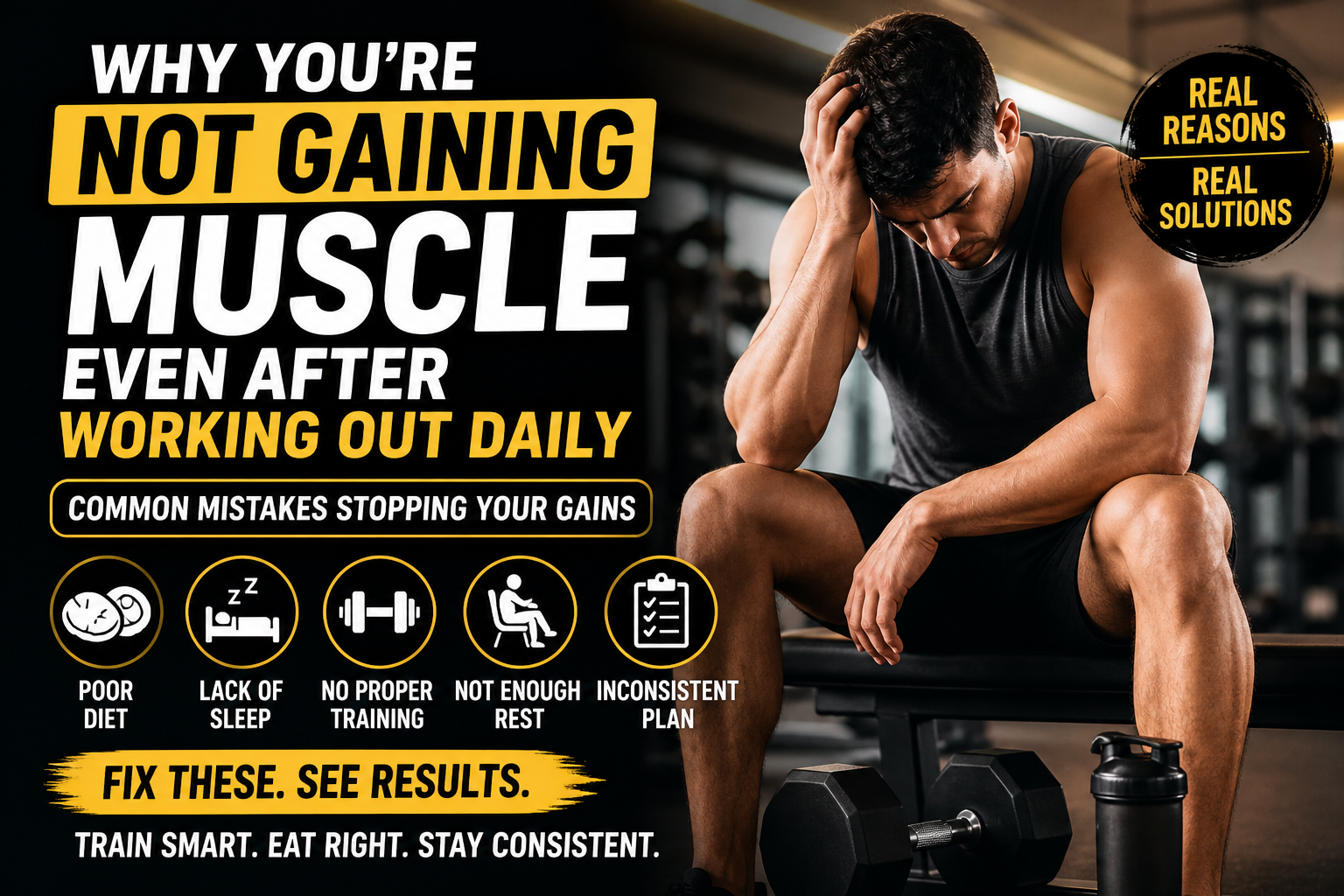
Many people go to the gym every day but still do not see muscle growth. This can feel frustrating. You are putting in effort, spending time, and following a routine, yet your body is not changing the way you expect.
The truth is simple: working out daily is not enough to build muscle. Muscle growth depends on proper training, correct diet, enough rest, and consistency over time. If even one of these is missing, your results will slow down or stop.
In this blog, we will explain in simple language why you may not be gaining muscle and what you can do to fix it.
1. You Are Not Eating Enough
Food is the most important factor in muscle gain. When you exercise, your body needs extra energy and nutrients to repair and build muscle.
If you are not eating enough:
- Your body will not have energy for growth
- Muscles will not recover properly
- You may even lose weight instead of gaining muscle
You cannot build muscle if your body is in a calorie deficit.
Solution:
Eat more balanced meals. Include carbohydrates, healthy fats, and protein. Try to eat 4–5 meals a day and do not skip meals.
2. Low Protein Intake
Protein is the building block of muscles. Without enough protein, your body cannot repair muscle fibers after a workout.
If your protein intake is low:
- Muscle recovery becomes slow
- Muscle growth stops
Solution:
Take enough protein daily. A simple rule is 0.8 to 1 gram of protein per kilogram of body weight. Good sources include eggs, paneer, chicken, fish, milk, and lentils.
3. No Proper Workout Plan
Many people go to the gym without a clear plan. They do random exercises every day.
This leads to:
- No focus on specific muscles
- Poor results
- Confusion and loss of motivation
Solution:
Follow a structured workout plan. Divide your workout into days such as chest, back, legs, shoulders, and arms. This helps each muscle group get proper attention and recovery time.
4. Not Increasing Weights
If you are lifting the same weights every day, your muscles will stop growing. Muscles need challenge to grow.
This concept is called progressive overload.
Solution:
Increase weights slowly over time. You can also increase the number of repetitions or sets. Small increases make a big difference.
5. Overtraining
Working out every day without rest can harm your progress. Many people think more workout means faster results, but this is not true.
Muscles grow when they recover, not while you are exercising.
Signs of overtraining:
- Constant tiredness
- Body pain
- Decrease in strength
Solution:
Take at least 1–2 rest days per week. Allow your body time to recover.
6. Poor Sleep
Sleep is very important for muscle growth. During sleep, your body repairs damaged muscle tissues and builds new ones.
If you do not sleep properly:
- Recovery slows down
- Hormones that help muscle growth are affected
Solution:
Sleep for 7–8 hours daily. Try to maintain a fixed sleep schedule.
7. Wrong Exercise Form
Doing exercises in the wrong way can reduce results and increase the risk of injury.
Many people lift heavy weights with poor form, which does not properly target the muscles.
Solution:
Focus on correct technique. It is better to lift lighter weights with proper form than heavy weights with wrong form. Taking guidance from a trainer can help.
8. Lack of Consistency
Consistency is the key to muscle gain. Many people start strong but stop after a few weeks.
Muscle building takes time. You cannot expect results in a short period.
Solution:
Stay consistent with your workouts, diet, and sleep. Even small daily efforts can bring big results over time.
9. Not Tracking Progress
If you are not tracking your progress, you may not notice small improvements.
This can lead to loss of motivation.
Solution:
Track your:
- Body weight
- Strength levels
- Body measurements
Take photos every few weeks to see visual changes.
10. Lack of Patience
Muscle building is a slow process. Many people give up because they do not see quick results.
Solution:
Be patient and trust the process. Visible results usually take 6–8 weeks, and proper muscle development can take months.
Simple Muscle Gain Plan
If you want better results, follow these basic steps:
- Work out 4–5 days a week
- Eat enough calories and protein
- Sleep 7–8 hours daily
- Take rest days
- Follow a structured workout plan
Conclusion
If you are working out daily but not gaining muscle, the issue is not your effort but your approach. Muscle growth depends on a combination of training, nutrition, rest, and consistency.
Focus on improving your diet, following a proper workout plan, and giving your body enough time to recover. Stay patient and consistent. With the right method, results will come.
FAQs
1. Why am I not gaining muscle even after working out daily?
You may not be eating enough, taking enough protein, or following a proper workout plan. Lack of rest and sleep can also affect muscle growth.
2. How much protein should I take daily?
You should take around 0.8 to 1 gram of protein per kilogram of your body weight.
3. Is it necessary to go to the gym every day?
No, 4–5 days a week is enough. Rest days are important for muscle recovery.
4. How long does it take to gain muscle?
You can see small changes in 4–6 weeks. Proper muscle growth usually takes a few months.
5. Can I build muscle without supplements?
Yes, you can build muscle with a proper diet. Supplements are optional.
6. Does sleep affect muscle growth?
Yes, sleep is very important because your body repairs and builds muscles during rest.
7. What is the best exercise for muscle gain?
Compound exercises like squats, deadlifts, and bench press are very effective.
8. Should I take a personal trainer?
If you are a beginner, a trainer can help you with proper form and planning.
9. What is overtraining?
Overtraining happens when you exercise too much without rest, which slows down muscle growth.
10. What is the biggest mistake in muscle building?
The biggest mistake is ignoring diet and recovery while focusing only on workouts.
Leave a Reply