
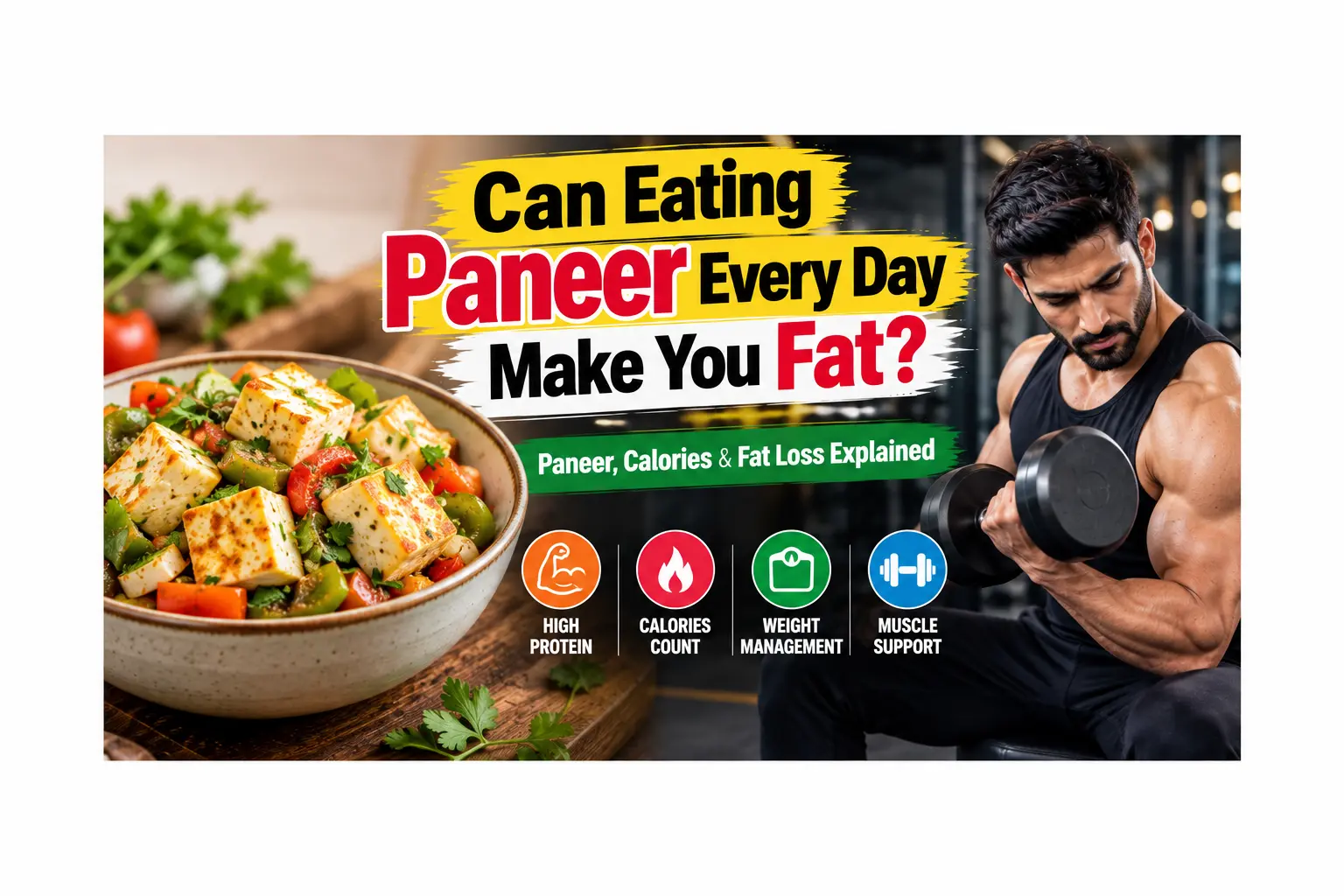
Paneer is one of the most popular protein-rich foods in Indian diets. It is common in vegetarian gym diets, weight-loss meals, muscle-building plans and everyday Indian cooking.
But there is one question many people ask:
“If I eat paneer every day, will I gain fat?”
The short answer is: Paneer itself does not automatically make you fat. What matters most is your total calorie intake, portion size, preparation method, daily activity and overall diet.
Paneer can be a useful food for people who want to build muscle or maintain a high-protein diet. However, because regular paneer can also contain a significant amount of fat and calories, eating very large portions every day may make it easier to consume more calories than your body needs.
Let’s understand how to include paneer correctly for muscle gain, fat loss and general fitness.
Does Eating Paneer Every Day Cause Weight Gain?
Not necessarily.
Body weight tends to increase over time when you consistently consume more calories than your body uses. The excess energy can be stored, including as body fat.
Paneer is only one part of your total diet.
For example, someone may eat paneer every day and maintain their weight because their total food intake matches their energy needs.
Another person may eat paneer every day along with:
- Butter
- Cream
- Cheese
- Fried foods
- Sweets
- Sugary drinks
- Large portions of rice or roti
- High-calorie sauces
In that situation, the overall diet may provide much more energy than the person needs.
So the real question is not:
“Does paneer make you fat?”
It is:
“How much paneer am I eating, how is it prepared, and how does it fit into my total daily diet?”
Why Is Paneer Good for Gym-Goers?
Paneer provides protein and can be a convenient vegetarian food for people who want to increase their protein intake.
Protein is important for muscle repair and maintenance, especially when combined with resistance training.
Research on resistance training shows that adequate protein intake can support improvements in muscle size and strength when combined with training.
This makes paneer useful for:
- Muscle-building diets
- Vegetarian gym diets
- Post-workout meals
- High-protein meals
- Weight-management diets
- General fitness nutrition
However, paneer should not be treated as a magic muscle-building food.
Your complete diet, training program, sleep and recovery all matter.
Can Paneer Help With Fat Loss?
Yes, paneer can fit into a fat-loss diet.
The important point is portion control.
A protein-rich meal may help you feel satisfied, and higher-protein diets can support satiety and help preserve lean tissue during weight loss in some situations.
But paneer still contributes calories.
If you eat a large quantity of paneer every day without considering your total calorie intake, it can make a calorie deficit harder to maintain.
So you don’t have to remove paneer from your diet to lose fat.
Instead, control the portion and prepare it in a sensible way.
Is Paneer High in Calories?
Paneer can be relatively calorie-dense because it contains both protein and fat.
The exact calories depend on:
- Type of milk used
- Brand
- Preparation
- Fat content
- Moisture content
- Serving size
This is why checking the nutrition label is useful when buying packaged paneer.
Also remember that the final meal can contain far more calories than the paneer itself.
For example, paneer cooked with a lot of:
- Oil
- Butter
- Cream
- Cashew paste
- Cheese
can become a much higher-calorie meal.
The cooking method can therefore make a big difference.
How Much Paneer Should You Eat?
There is no single paneer portion that is perfect for everyone.
Your suitable serving depends on:
- Your body size
- Daily calorie needs
- Protein requirements
- Fitness goal
- Activity level
- Other protein sources in your diet
- Total fat intake
Someone trying to gain muscle may have different nutritional needs from someone trying to lose body fat.
Instead of deciding that you must eat a huge amount of paneer every day, look at your total daily protein and calorie intake.
A nutritionist or qualified dietitian can help you calculate an appropriate portion based on your individual needs.
Paneer for Muscle Gain
If your goal is muscle gain, paneer can be included as one protein source in your diet.
For example, you could combine paneer with:
- Roti
- Rice
- Vegetables
- Dal
- Salad
- Curd
- Fruit
The goal is to build a balanced meal rather than eating paneer alone.
Your training also matters.
If you are lifting weights regularly, progressive resistance training gives your muscles a reason to adapt and grow.
Protein then provides amino acids needed for normal muscle repair and maintenance.
Higher protein intake combined with resistance exercise has been associated with improvements in muscle-related outcomes.
Paneer for Weight Loss
If your goal is fat loss, you don’t have to completely avoid paneer.
Try these simple strategies:
Choose a sensible portion
Instead of eating a very large bowl of paneer, use a controlled serving that fits your meal plan.
Add vegetables
Add capsicum, onion, tomato, spinach, broccoli or other vegetables to increase meal volume and improve overall nutrient quality.
Control cooking oil
This is one of the easiest changes you can make.
Paneer cooked with a small amount of oil can be very different from paneer cooked with lots of butter, cream and oil.
Avoid deep frying
Grilled, lightly cooked or air-fried paneer can be easier to fit into a calorie-controlled meal than heavily fried preparations.
Watch the complete meal
Don’t focus only on paneer.
Look at your entire plate.
A large paneer serving + several rotis + butter + creamy gravy + dessert can turn a simple meal into a very high-calorie meal.
Is Low-Fat Paneer Better for Weight Loss?
Low-fat paneer can be useful if you are trying to reduce calories or fat while keeping paneer in your diet.
However, that does not mean regular paneer is unhealthy.
The best choice depends on your overall diet and goals.
If you enjoy regular paneer and your calories are controlled, there may be no need to completely remove it.
If you need to reduce calories, low-fat paneer can be one option.
Can You Eat Paneer Every Day?
For many healthy adults, paneer can be part of a balanced diet every day if the quantity and overall diet are appropriate.
But eating the same food every day is not necessary.
A better approach is to get protein from different sources such as:
- Paneer
- Milk
- Curd
- Greek yogurt
- Eggs
- Fish
- Chicken
- Soy
- Tofu
- Dal
- Beans
- Lentils
This gives you more variety in your diet.
If you have a medical condition or specific dietary restriction, your food choices should be discussed with a qualified healthcare professional or dietitian.
Common Mistakes People Make With Paneer
1. Eating unlimited quantities
Paneer is nutritious, but more is not always better.
2. Ignoring calories
A healthy food can still contribute to excess calorie intake when eaten in very large portions.
3. Adding too much oil
The oil used for cooking can add a significant amount of energy to the meal.
4. Choosing creamy gravies
Restaurant-style paneer dishes can contain ingredients such as cream, butter and nuts, which can increase calories.
5. Eating paneer without enough vegetables
A balanced meal should include more than just one protein source.
6. Thinking protein automatically means fat loss
Protein can support a healthy diet, but fat loss still depends heavily on overall energy balance.
Best Ways to Eat Paneer for Fitness
If you are trying to keep paneer in your gym diet, consider simple preparations such as:
Paneer and vegetables:
Grilled paneer with capsicum, onion and other vegetables.
Paneer bhurji:
Paneer cooked with tomato, onion and spices using a controlled amount of oil.
Paneer salad:
Paneer with cucumber, tomato, lettuce and other vegetables.
Paneer with roti:
A balanced Indian meal with paneer, roti and vegetables.
Paneer with rice:
Use a controlled portion of rice and add vegetables and other nutrient-rich foods.
The goal is not to make your diet boring. The goal is to make it sustainable.
Should You Eat Paneer Before or After a Workout?
Paneer can be included before or after training depending on your overall meal timing and digestion.
Some people prefer a lighter meal before exercise because paneer can feel filling.
After training, a balanced meal containing protein and carbohydrates can support recovery and replenish energy.
There is no magic requirement that paneer must be eaten immediately after your workout.
Your total daily nutrition is more important than trying to eat one specific food at one exact minute.
What I Recommend for Gym-Goers
As a fitness trainer, I would not tell every client to remove paneer simply because they want to lose fat.
Instead, I look at the complete picture:
Goal → calories → protein → training → portion size → food quality → consistency.
If your goal is muscle gain, paneer can be a useful protein-rich food.
If your goal is fat loss, paneer can still fit into your diet with sensible portions.
If your weight is increasing despite eating paneer every day, don’t immediately blame paneer. Look at your total food intake, cooking oils, snacks, drinks, restaurant meals and activity level.
At Bodyzone Fitness & Spa in Chandigarh, personal training programs can be customized around goals such as fat loss, muscle gain, strength and body transformation. Nutrition habits can be considered alongside your training routine so your workout and diet work toward the same goal.
Bodyzone Personal Training in Chandigarh
Final Verdict
Eating paneer every day does not automatically make you fat.
Paneer can be a valuable part of a balanced diet because it provides protein and can work well in vegetarian fitness meals.
The main issue is quantity and total calorie intake.
If you eat reasonable portions, control added fats, include vegetables and stay active, paneer can fit into both muscle-building and fat-loss diets.
Don’t fear paneer.
Learn how to portion it, prepare it and fit it into your overall nutrition plan.
Frequently Asked Questions
1. Can eating paneer every day make me fat?
Not automatically. Weight gain generally happens when you consistently consume more calories than your body uses. The amount of paneer and your total diet both matter.
2. Is paneer good for weight loss?
Yes, paneer can be included in a weight-loss diet. Keep the portion appropriate and control cooking oil and other high-calorie ingredients.
3. Can I eat paneer every day while going to the gym?
Yes, paneer can be one of your regular protein sources. However, variety in your diet is still important.
4. Is paneer good for muscle gain?
Paneer provides protein and can support a muscle-building diet when combined with adequate overall nutrition and resistance training.
5. Can I eat paneer at night?
Yes. Eating paneer at night does not automatically cause fat gain. Your overall calorie intake and diet pattern matter more than the clock.
6. Is paneer better than whey protein?
They are different foods. Paneer provides protein along with other nutrients and fat, while whey is a concentrated protein source. Your choice depends on your diet, preferences and nutritional needs.
7. Can I eat paneer during fat loss?
Yes. You can include paneer during fat loss while controlling portion size and total daily calories.
8. Does paneer increase belly fat?
Paneer does not specifically cause belly fat. Overall excess energy intake over time can contribute to increased body fat.
9. Is low-fat paneer better for weight loss?
Low-fat paneer can make it easier to reduce calories and fat intake, but regular paneer can also fit into a balanced diet when portions are appropriate.
10. Can paneer replace chicken for protein?
Paneer can be an important vegetarian protein source, but its nutrition profile differs from chicken. Choose based on your dietary preferences and total nutrition needs.
11. How should I cook paneer for weight loss?
Grilling, lightly sautéing or adding paneer to vegetable-based meals can help control calories. Avoid using excessive butter, oil or cream.
12. Should I stop eating paneer if I am gaining weight?
Not necessarily. First review your complete diet and activity level. You may simply need to adjust portions or other high-calorie foods.
Leave a Reply