
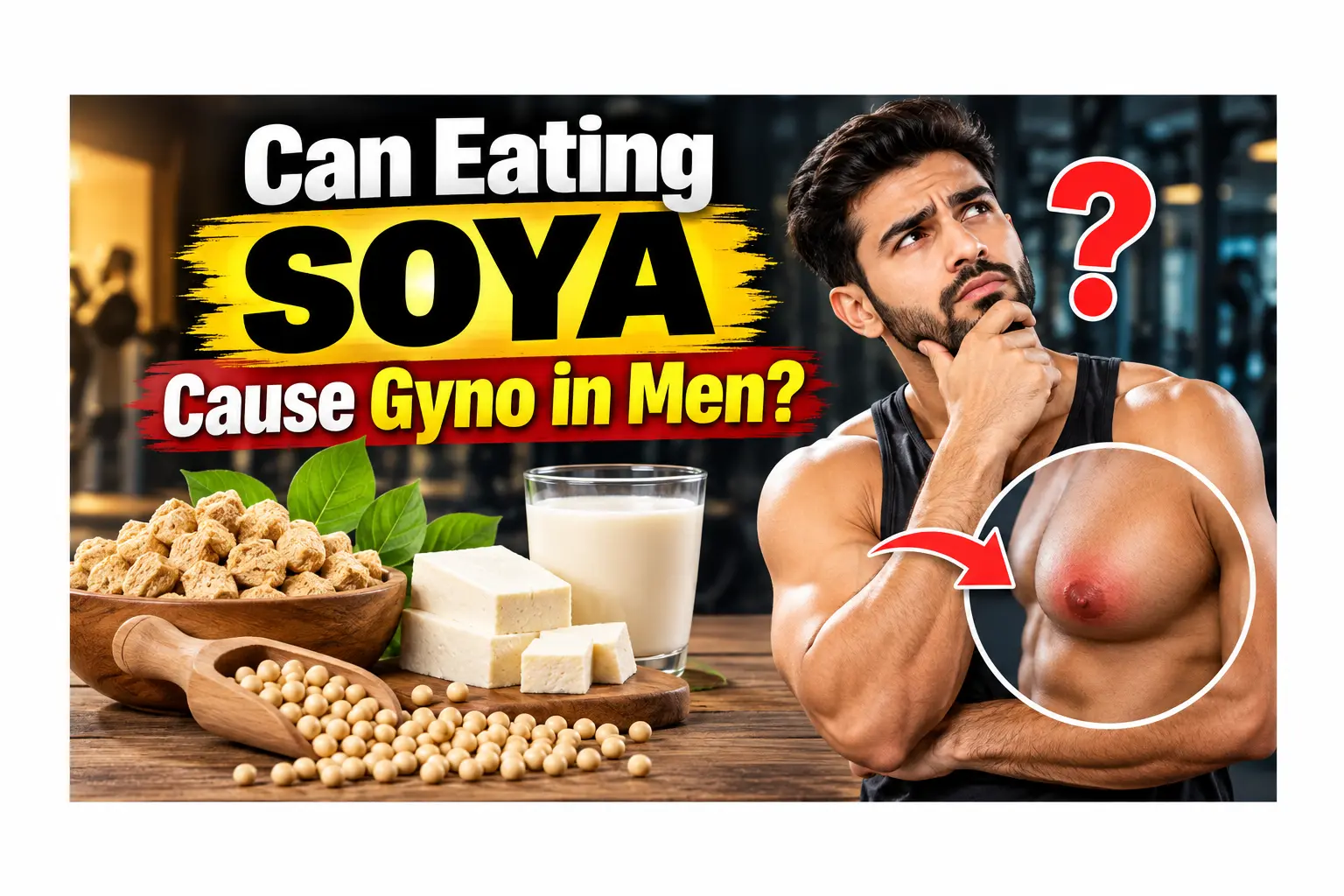
If you spend time in the gym, you may have heard this question:
“Does eating soya cause gyno in men?”
This is a common concern, especially among men who eat soy chunks or soy protein because they want an affordable, high-protein food.
You may have also heard that soy contains phytoestrogens, and that these compounds can increase estrogen in men and cause gynecomastia, commonly called gyno.
But is this actually true?
Based on current human research, normal soy or soy protein intake has not been shown to cause gynecomastia or meaningfully change testosterone or estrogen levels in men. A large 2021 meta-analysis of 41 clinical studies involving more than 1,700 men found no significant effects of soy or isoflavone intake on testosterone, free testosterone, estradiol or estrone.
So let’s break this topic down in very simple language.
What Is Gyno?
Gynecomastia means an increase in male breast gland tissue.
It can make the area underneath or around the nipple look swollen or enlarged. Some men may also experience tenderness or sensitivity.
Gynecomastia happens when there is a change in the balance between estrogen and testosterone activity in the body.
It is important to understand that not every man with a bigger chest has gynecomastia.
Gyno vs Chest Fat
There are two different things that are often confused:
Gynecomastia: Growth of actual breast gland tissue.
Pseudogynecomastia: Increased fat around the chest without enlargement of the breast gland.
If someone gains body fat, their chest can become softer and larger. That does not automatically mean they have gyno.
This is one reason why people sometimes blame a particular food when the actual issue may be overall weight gain.
What Is Soya?
Soybeans are a type of legume and are widely used as a source of plant protein.
You can find soy in foods such as:
- Soy chunks
- Soybeans
- Tofu
- Tempeh
- Soy milk
- Soy protein
- Some vegetarian protein products
Soy is especially popular among people who follow vegetarian or plant-based diets because it provides a useful amount of protein.
For people who train in the gym, soy chunks can also be a convenient and affordable protein-rich food.
Why Do People Think Soy Causes Gyno?
The confusion mainly comes from a group of natural compounds called isoflavones.
Isoflavones are sometimes called phytoestrogens.
The word “estrogen” makes many people immediately think:
“If soy contains something that acts like estrogen, won’t it increase estrogen in men?”
This is where the misunderstanding starts.
Phytoestrogens are plant compounds that can interact with estrogen receptors, but they are not the same thing as human estrogen.
More importantly, what happens in laboratory studies or animal studies does not automatically mean the same thing happens in humans eating normal amounts of soy.
Human research is what matters when answering whether soy causes hormonal problems in men.
Does Soy Lower Testosterone in Men?
This is one of the biggest myths surrounding soy.
A large updated meta-analysis published in 2021 looked at 41 clinical studies involving men consuming soy foods, soy protein or isoflavones.
Researchers looked at:
- Total testosterone
- Free testosterone
- Estradiol
- Estrone
- Sex hormone-binding globulin
The analysis found no significant effects of soy protein or isoflavone intake on these hormone measures, including testosterone and estrogen.
An earlier meta-analysis also reached a similar conclusion, finding no significant effect of soy or isoflavones on testosterone, free testosterone, SHBG or free androgen index in men.
So, based on the available human clinical evidence, eating normal amounts of soy does not appear to lower testosterone in men in a way that would support the claim that soy causes gyno.
Does Soy Increase Estrogen in Men?
This is another common question.
The updated meta-analysis mentioned above found no significant increase in estradiol or estrone from soy or isoflavone consumption in the men studied.
A broader technical review that examined hundreds of reports also concluded that the available human evidence does not show adverse effects of isoflavones on testosterone or estrogen levels in men.
So the simple idea that:
“Soy contains phytoestrogen, therefore eating soy will increase estrogen and cause gyno”
does not match the overall human evidence.
What About Soy Chunks?
Soy chunks are a particularly common food among Indian gym-goers.
They are made from soy protein and are often used as a vegetarian protein source.
Many people ask:
“If I eat soy chunks every day, will I develop gyno?”
There is currently no good evidence showing that normal consumption of soy chunks causes gynecomastia in men.
However, your complete diet still matters.
If you are eating soy chunks as part of a balanced diet, getting enough calories and nutrients, and following a proper workout routine, there is no scientific reason to automatically remove soy because of fear of gyno.
What Actually Causes Gyno?
Gynecomastia can have many possible causes.
These include:
1. Natural Hormonal Changes
Gyno can occur during puberty because hormone levels naturally change.
It can also occur later in life as hormone levels change with age.
2. Certain Medicines
Some medications can contribute to gynecomastia.
Examples include certain medicines used for prostate conditions, heart problems and other medical conditions.
3. Anabolic Steroids
This is particularly relevant to gym-goers.
Anabolic steroid use can affect the body’s hormone balance and is a known risk factor for gynecomastia.
This is one reason I always tell gym members not to experiment with steroids or hormone-related drugs without proper medical supervision.
4. Excess Body Fat
Being overweight can be associated with gynecomastia and hormonal changes.
Remember, chest fat and true gynecomastia are not the same thing.
5. Certain Health Conditions
Problems involving the testicles, thyroid, liver or kidneys can affect hormone balance and may be associated with gynecomastia.
Is Gyno Always Caused by Food?
No.
This is an important point.
If you notice a change around your chest, don’t immediately blame the last food you added to your diet.
Gynecomastia can have several causes, and identifying the cause is more useful than removing random foods.
For example, a man might develop chest enlargement because of:
- Hormonal changes
- Medication
- Steroid use
- Weight gain
- An underlying health condition
rather than because he ate soy.
Can You Eat Soya While Building Muscle?
Yes.
Soy can be included in a muscle-building diet.
The main thing to consider is your total daily protein intake and overall diet quality.
Good protein sources can include:
- Eggs
- Chicken
- Fish
- Milk
- Curd
- Paneer
- Soy
- Tofu
- Dal
- Beans
- Whey protein
You don’t have to depend on only one protein source.
As a trainer, I prefer clients to have variety in their diet rather than becoming afraid of individual foods without a good reason.
Is Soy Protein Good for Gym Beginners?
Soy protein can be useful for people who want a plant-based protein source.
It can help contribute to your daily protein intake.
However, remember that protein alone does not build muscle.
Muscle development requires a combination of:
- Resistance training
- Adequate protein
- Enough total energy
- Recovery
- Sleep
- Consistency
A person can eat excellent protein but make little progress if they don’t train properly.
What If You Already Have Gyno?
If you already notice breast enlargement, don’t assume soy is the cause.
If there is a firm or hard lump, pain, tenderness, nipple discharge, swelling or a noticeable change in the breast, you should get medical advice rather than trying to treat it yourself. Mayo Clinic specifically recommends medical evaluation for these symptoms.
A doctor can help determine whether the issue is gynecomastia, fat accumulation or another condition.
Don’t start hormone blockers or other medicines based on gym advice or social-media videos.
Should Men Stop Eating Soy to Protect Testosterone?
For most healthy men, there is no evidence-based reason to completely avoid normal soy foods simply because of fear that they will lower testosterone or cause gyno.
The current human evidence does not support that claim.
Instead of worrying about one food, focus on the bigger picture:
Train hard. Eat well. Sleep properly. Maintain a healthy body weight. Avoid unnecessary steroid use. Stay consistent.
Those basics will have a much bigger impact on your fitness journey.
My Advice as a Fitness Trainer
After years of working with gym members, I’ve noticed one common problem:
People often spend too much time worrying about one food and not enough time focusing on the fundamentals.
Someone may ask:
“Can I eat soy?”
But the same person may be sleeping five hours, skipping workouts, eating very little protein and following a random diet.
That is where priorities need to change.
Don’t build your entire fitness plan around fear of individual foods.
Look at your complete lifestyle.
If soy fits your diet and you enjoy it, it can be one of your protein sources.
If you don’t like soy, there are plenty of alternatives.
The goal is not to find one magical food.
The goal is to build a diet and training routine you can follow for months and years.
Final Verdict: Does Soya Cause Gyno in Men?
Current human evidence does not show that normal soy or soy protein consumption causes gynecomastia in men.
Large reviews of clinical studies have found no significant effect of soy or isoflavones on testosterone or estrogen levels in men.
So, if you are eating soy chunks as part of a balanced diet, you don’t need to panic about developing gyno simply because the food contains isoflavones.
If you have actual breast enlargement, pain, a lump or other unusual symptoms, speak with a healthcare professional to identify the real cause.
Don’t let gym myths decide your diet. Learn the facts, train consistently and make smart choices.
Frequently Asked Questions
1. Can eating soy chunks cause gyno in men?
Current human research does not show that normal soy consumption causes gynecomastia in men. Large clinical meta-analyses have found no significant effect of soy intake on testosterone or estrogen levels.
2. Does soy lower testosterone?
Current clinical evidence does not show a significant reduction in testosterone from soy or isoflavone consumption in men.
3. Does soy increase estrogen in men?
Clinical research has not found a significant increase in estradiol or estrone from soy or isoflavone intake in men.
4. Can I eat soy chunks every day?
Soy can be included as part of a balanced diet. Your overall food intake, protein intake and nutritional variety are more important than fearing soy because of the gyno myth.
5. What is gynecomastia?
Gynecomastia is an increase in male breast gland tissue, usually associated with changes in the balance between estrogen and testosterone activity.
6. Is chest fat the same as gyno?
No. Chest fat, sometimes called pseudogynecomastia, is caused by fat accumulation rather than growth of breast gland tissue.
7. Can steroids cause gyno?
Yes. Anabolic steroid use can disrupt hormone balance and is a recognized cause or risk factor for gynecomastia.
8. Should I stop soy if I have gyno?
Don’t assume soy is the cause. If you have gynecomastia, discuss it with a healthcare professional to identify the underlying cause.
9. Is soy a good protein source for gym-goers?
Yes. Soy foods can contribute useful protein to the diet and can be particularly helpful for people who prefer vegetarian or plant-based protein sources.
10. Can soy help build muscle?
Soy can contribute to your daily protein intake, which is important for muscle growth. However, muscle development also requires progressive resistance training, sufficient nutrition and recovery.
11. Does eating more protein prevent gyno?
No. Protein is important for muscle and general nutrition, but it does not prevent gynecomastia.
12. When should I see a doctor about gyno?
See a healthcare professional if you notice a firm or hard lump, significant swelling, persistent pain or tenderness, nipple discharge, or skin changes.
13. Is soy estrogen the same as human estrogen?
No. Soy contains plant compounds called isoflavones that can interact with estrogen receptors, but they are not the same as human estrogen. The effects seen in human studies do not support the idea that normal soy intake causes hormonal feminization in men.
14. Should beginners avoid soy while going to the gym?
There is no evidence-based reason for healthy men to avoid normal soy foods simply because they are worried about gyno. A balanced diet and structured workout plan should be the priority.
Important: This article is for general fitness education, not diagnosis or medical treatment. If you have symptoms of gynecomastia or concerns about your hormones, consult a qualified healthcare professional.
Leave a Reply