
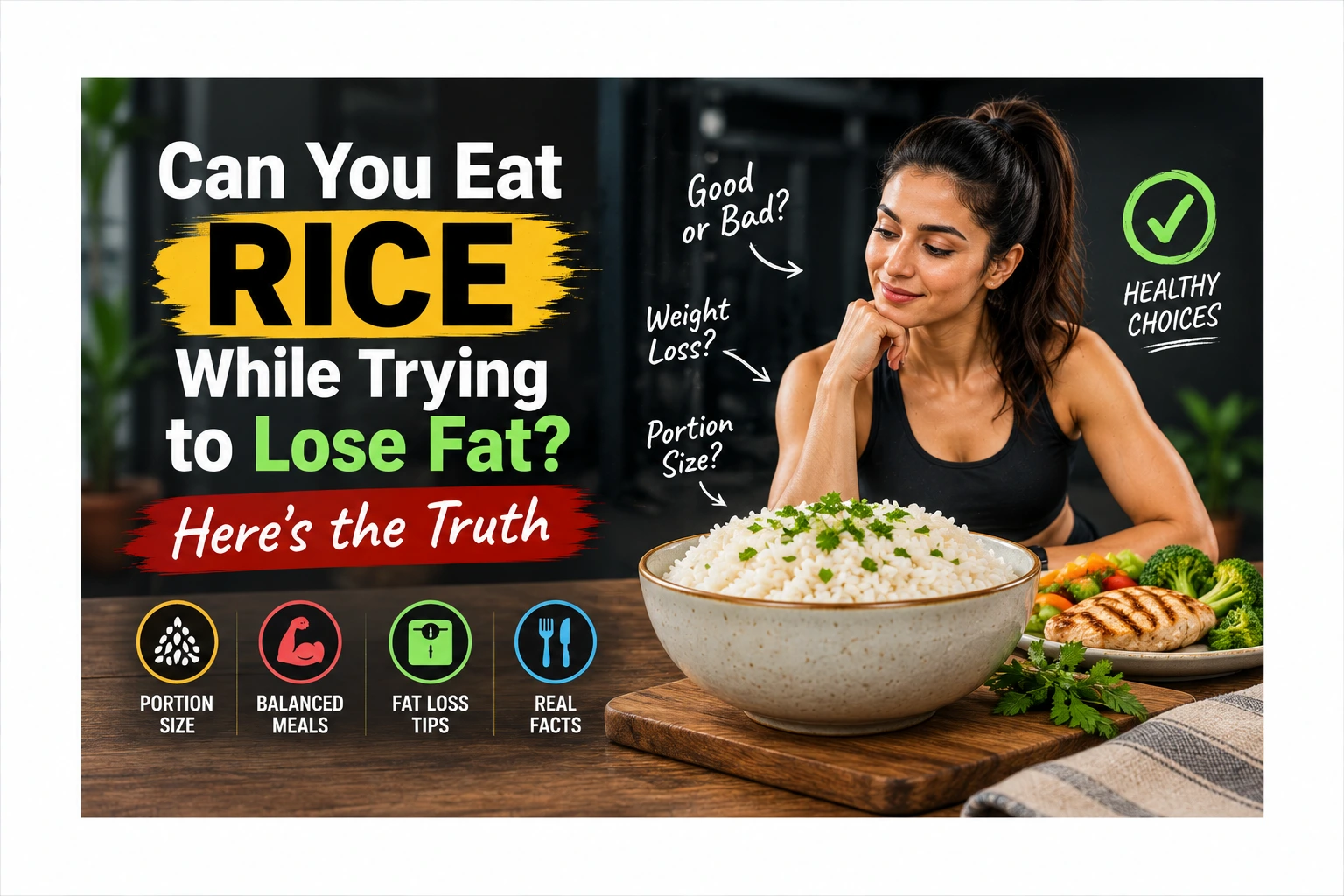
If you are trying to lose fat, you may have heard that you should stop eating rice. This is especially common in Indian diets, where rice is a regular part of lunch and dinner. But does eating rice really stop fat loss?
The simple answer is no.
You can eat rice and still lose body fat. Fat loss depends mainly on your overall calorie intake, food quality, activity level, and consistency. Rice is a source of carbohydrates and can be part of a healthy, balanced fat-loss diet when you control portions and pair it with protein, vegetables, and other nutritious foods.
The real problem is usually not rice itself. It is how much you eat, what you eat with it, and how your total diet looks.
Why Do People Think Rice Causes Weight Gain?
Rice often gets blamed for weight gain because it is a carbohydrate-rich food.
Carbohydrates provide energy to the body. Your body can use this energy during daily activities, walking, cardio, and strength training.
The problem starts when your total food intake regularly provides more energy than your body needs. Extra energy can be stored as body fat over time.
This means eating a bowl of rice does not automatically make you gain fat.
A person can eat rice every day and lose weight if their overall diet supports a calorie deficit. Another person can avoid rice but still gain weight by eating too many calorie-dense foods such as fried snacks, sweets, sugary drinks, sauces, or large portions of other foods.
The complete diet matters more than one food.
Can You Eat White Rice During Fat Loss?
Yes.
White rice can fit into a fat-loss diet.
White rice is a refined grain, meaning the bran and germ have been removed during processing. This reduces its fiber and some nutrients compared with whole-grain rice.
However, this does not mean white rice is automatically a “bad” food.
For many people, white rice is affordable, easy to cook, easy to digest, and enjoyable to eat. A diet that includes foods you enjoy may also be easier to follow consistently.
The key is portion control and meal balance.
Brown Rice vs White Rice for Fat Loss
Brown rice is a whole grain because it keeps the bran and germ.
It generally contains more fiber and nutrients than refined white rice. Whole grains are commonly recommended as healthier carbohydrate choices because they provide more fiber and nutrients.
Some research has found that replacing white rice with brown rice may help with body weight and other measures. However, the evidence is not strong enough to say that brown rice is a magic fat-loss food. One meta-analysis of randomized trials found lower body weight with brown rice compared with white rice, but the researchers rated the certainty of evidence as low or very low.
So, if you enjoy brown rice, it can be an excellent choice.
But if you prefer white rice, you do not have to completely remove it to lose fat.
How Much Rice Should You Eat?
There is no single rice portion that is perfect for everyone.
Your ideal portion depends on:
- Your body size
- Daily calorie needs
- Activity level
- Workout routine
- Fat-loss goal
- Other foods in your meal
- How often you eat rice
A simple starting point is to keep your rice portion moderate instead of filling most of your plate with rice.
For example, you can build your meal like this:
½ plate: vegetables or salad
¼ plate: protein
¼ plate: rice or another carbohydrate
This is not a strict rule. It is simply an easy way to control portions.
If you are very active or have a demanding training schedule, your carbohydrate needs may be higher.
Rice and Protein: A Better Combination for Gym-Goers
If you are trying to lose fat while going to the gym, do not think only about reducing carbohydrates.
You also need to think about protein.
Protein helps support muscle maintenance and recovery. During fat loss, maintaining muscle is especially important if you are doing resistance training.
Instead of eating a large plate of plain rice, combine a moderate rice portion with a good protein source.
Examples include:
- Rice + dal
- Rice + rajma
- Rice + chana
- Rice + paneer
- Rice + tofu
- Rice + eggs
- Rice + chicken
- Rice + fish
- Rice + curd
Add vegetables or salad to make the meal more filling and nutritious.
Does Eating Rice at Night Cause Fat Gain?
This is another common question.
Eating rice at night does not automatically cause fat gain.
Your body does not suddenly turn rice into body fat simply because you eat it after sunset.
The bigger issue is your total daily calorie intake.
If you eat a reasonable portion of rice at dinner and your overall diet supports fat loss, rice can still be part of your evening meal.
However, some people may eat larger portions at night because they are extremely hungry after restricting food during the day. In that situation, controlling portions and building more balanced meals throughout the day can help.
Can You Eat Rice Every Day and Still Lose Fat?
Yes.
You can eat rice every day if it fits your overall nutrition plan.
For example, someone may have rice at lunch every day while maintaining a calorie deficit through appropriate portions and regular activity.
There is no requirement to completely remove one particular food for successful fat loss.
In fact, completely removing foods you enjoy can make a diet difficult to maintain.
A better approach is to learn how to manage portions and balance your meals.
Does Rice Make You Hungry Again Quickly?
This can depend on the type of rice, portion size, and what you eat with it.
White rice is relatively low in fiber compared with brown rice. Whole grains generally provide more fiber, which can help make meals more filling.
If you feel hungry soon after eating rice, try adding:
- Vegetables
- Salad
- Dal
- Beans
- Eggs
- Chicken
- Fish
- Paneer
- Curd
Adding protein and fiber can make the complete meal more satisfying.
What About Basmati Rice?
Basmati rice can also be included in a fat-loss diet.
Many Indian households prefer basmati rice because of its taste and texture.
The important thing is still the amount you eat and the complete meal.
Do not assume that a particular rice variety will automatically burn fat.
There is no special rice that directly burns body fat.
Does Cooking Method Matter?
Yes.
Plain steamed or boiled rice is very different from a large serving of fried rice loaded with oil.
When trying to lose fat, the added ingredients can significantly increase the calories in a meal.
For example, rice cooked with large amounts of:
- Oil
- Butter
- Ghee
- Cream
- Fried ingredients
- High-calorie sauces
can become much more calorie-dense.
This does not mean you can never eat these foods. It simply means they should be considered as part of your total calorie intake.
What About Rice and Dal?
Rice and dal can be a very useful combination.
Rice provides carbohydrates, while dal provides protein and other nutrients.
However, the exact protein amount depends on the type and quantity of dal. If your protein needs are high because of regular gym training, you may need additional protein sources such as curd, eggs, paneer, tofu, chicken, fish, or another suitable option.
Can Rice Help Your Gym Performance?
Yes.
Carbohydrates are an important energy source during exercise.
If you are doing strength training, cardio, sports, or high-volume workouts, carbohydrates can help support training.
This is why removing all carbohydrates during fat loss is not necessary.
Instead, choose an amount that matches your energy needs.
Someone who trains hard five or six days per week may have different carbohydrate needs from someone who has a mostly sedentary lifestyle.
What If You Are Not Losing Fat Even After Reducing Rice?
If your weight or body measurements are not changing, don’t immediately assume that rice is the problem.
Look at your complete diet.
Check:
- Rice portions
- Cooking oil
- Snacks
- Sugary drinks
- Sweets
- Weekend eating
- Restaurant meals
- Alcohol, if applicable
- Protein intake
- Vegetable intake
- Daily activity
- Workout consistency
- Sleep
Sometimes people reduce rice but unknowingly replace those calories with snacks, nuts, sauces, sweets, or larger portions of other foods.
Fat loss requires looking at the whole picture.
Should You Choose Brown Rice for Weight Loss?
Brown rice is a good option if you like it.
Because it is a whole grain, it generally contains more fiber and nutrients than white rice.
Research comparing brown and white rice suggests brown rice may have some advantages for weight-related outcomes, but the evidence is not strong enough to treat brown rice as a special fat-burning food.
The best rice is often the one that you enjoy, can portion correctly, and can include in a balanced diet consistently.
Simple Rice Meals for Fat Loss
Here are some practical ideas for gym-goers:
Option 1
Rice + dal + mixed vegetables + curd
Option 2
Rice + grilled chicken + salad
Option 3
Rice + rajma + cucumber salad
Option 4
Rice + paneer/tofu + vegetables
Option 5
Rice + fish + cooked vegetables
Option 6
Rice + eggs + vegetable curry
Keep an eye on cooking oil and portion sizes.
The Biggest Rice Mistake During Fat Loss
The biggest mistake is thinking:
“Rice is healthy, so I can eat as much as I want.”
Even nutritious foods contain calories.
A large serving of rice can provide much more energy than a moderate serving.
The same principle applies to other foods.
Healthy food does not mean unlimited food.
Portion size still matters.
The Bottom Line
Yes, you can eat rice while trying to lose fat.
You do not need to completely remove rice from your diet. White rice can fit into a fat-loss plan, while brown rice offers more fiber and nutrients because it is a whole grain.
Focus on your total calorie intake, portion size, protein, vegetables, physical activity, strength training, and consistency.
Instead of asking, “Is rice fattening?” ask:
“How much rice fits into my overall diet?”
That is a much more useful question for long-term fat loss.
Frequently Asked Questions
1. Can I eat rice and still lose belly fat?
Yes. Rice does not specifically cause belly fat. Overall fat loss depends on your total energy balance and lifestyle. You cannot choose exactly where your body loses fat first.
2. Is white rice bad for weight loss?
No. White rice can be included in a weight-loss diet. However, it has less fiber than brown rice, so portion size and the foods you eat with it are important.
3. Is brown rice better than white rice for fat loss?
Brown rice is a whole grain and generally provides more fiber and nutrients. Some research suggests it may offer weight-related benefits compared with white rice, but it is not a magic fat-loss food.
4. How much rice should I eat during fat loss?
There is no universal amount. Start with a moderate portion and adjust it according to your calorie needs, activity level, and progress.
5. Can I eat rice at night while losing fat?
Yes. Eating rice at night does not automatically cause fat gain. Your total daily calorie intake matters more than the time you eat rice.
6. Can gym-goers eat rice?
Absolutely. Rice provides carbohydrates that can support energy for workouts. Combine it with protein and vegetables for a more balanced gym meal.
7. Is basmati rice good for weight loss?
Basmati rice can fit into a fat-loss diet. The most important factors are portion size, cooking method, and your total daily calorie intake.
8. Can I eat rice every day and lose weight?
Yes. Rice can be eaten daily if your overall diet is balanced and your calorie intake supports your fat-loss goal.
9. Does rice increase blood sugar quickly?
White rice is a refined grain and can raise blood glucose more quickly than some higher-fiber carbohydrate choices. The effect can vary with the rice type, portion, cooking, and what you eat with it.
10. Is rice better before or after a workout?
Rice can work in either situation. Before training, carbohydrates can provide energy. After training, rice can be combined with protein to create a balanced meal.
11. Should I stop eating rice if my weight loss has stopped?
Not necessarily. First review your total calorie intake, portion sizes, snacks, drinks, cooking oils, activity, and consistency. Rice may not be the reason for a fat-loss plateau.
12. Can rice help build muscle?
Rice provides carbohydrates that can support training, but rice itself is not a high-protein muscle-building food. For muscle growth, combine carbohydrates with adequate protein and resistance training.
13. Is rice better than roti for fat loss?
Neither is automatically better. Both can fit into a fat-loss diet. The better choice depends on portion size, preparation, fiber, your overall diet, and what you can consistently follow.
14. Can I eat fried rice during fat loss?
You can occasionally include it, but fried rice can contain considerably more calories because of oil and other ingredients. Portion control becomes especially important.
15. What is the healthiest way to eat rice for fat loss?
Try pairing a moderate portion of rice with a good protein source, plenty of vegetables, and a controlled amount of oil. This creates a more balanced and filling meal.
Leave a Reply