
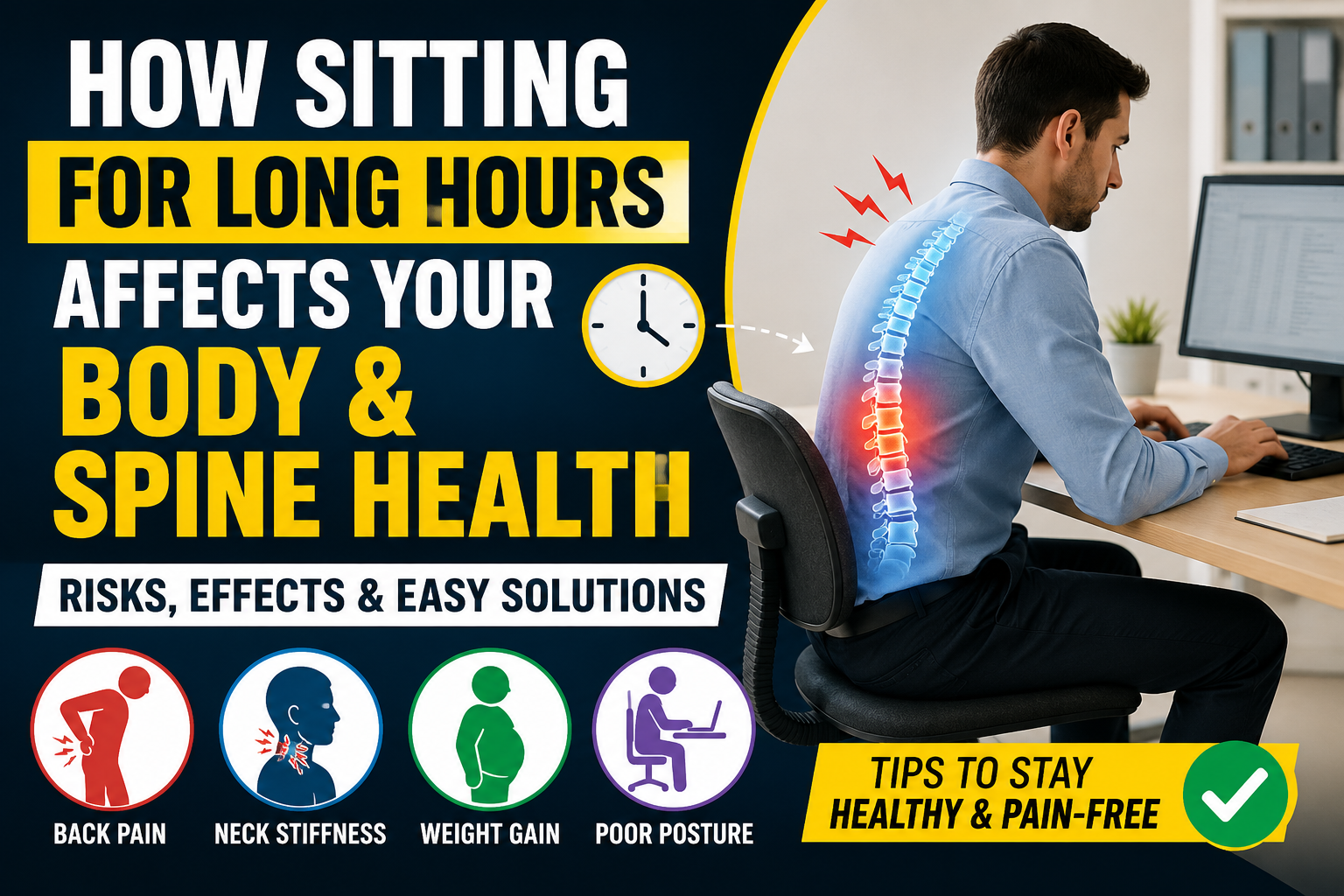
Today, many people spend most of their day sitting. Office workers sit in front of computers, students sit in classrooms, and many people spend hours using mobile phones or watching TV. While sitting may seem harmless, staying in the same position for a long time can affect your health.
Long sitting hours can lead to back pain, neck pain, poor posture, weight gain, and other health problems. The good news is that simple lifestyle changes and regular exercise can help reduce these problems.
In this article, you will learn how sitting for long hours affects your body and spine health and what you can do to stay healthy.
Why Sitting for Long Hours is Harmful
Our body is made for movement. Walking, stretching, and changing positions help muscles and joints stay active.
When you sit for many hours without moving:
- Muscles become tight.
- Blood circulation slows down.
- The spine stays under pressure.
- The body burns fewer calories.
- Energy levels decrease.
Over time, this can lead to several health problems.
1. Causes Back Pain
One of the most common problems caused by sitting is lower back pain.
When you sit for a long time:
- Your lower back supports most of your body weight.
- Spine muscles become tired.
- Pressure increases on spinal discs.
This can cause stiffness and pain.
People who work on computers often experience this problem.
2. Leads to Poor Posture
Many people sit with:
- Rounded shoulders
- Bent neck
- Slouched back
Poor posture puts extra pressure on the spine.
Over time, this may lead to:
- Neck pain
- Shoulder pain
- Upper back pain
- Poor body alignment
Good sitting posture helps reduce these problems.
3. Weakens Core Muscles
Core muscles support your spine.
When you sit all day, these muscles become weak because they are not used enough.
Weak core muscles increase the risk of:
- Back pain
- Poor balance
- Spine problems
- Muscle weakness
Regular exercise helps strengthen your core.
4. Causes Neck Pain
Looking at a computer screen or mobile phone for hours puts pressure on your neck.
This is often called “tech neck.”
Common symptoms include:
- Neck stiffness
- Headaches
- Shoulder tightness
- Difficulty moving the neck
Keeping your screen at eye level can help reduce neck strain.
5. Reduces Blood Circulation
Long sitting slows blood flow, especially in your legs.
Poor circulation may cause:
- Swollen feet
- Leg pain
- Tired legs
- Numbness
Standing up every hour improves blood circulation.
6. Increases Risk of Weight Gain
When you sit most of the day, your body burns fewer calories.
Less movement means:
- More fat storage
- Slower metabolism
- Increased body weight
Regular physical activity helps maintain a healthy weight.
7. Affects Spine Health
Your spine supports your entire body.
Long sitting places continuous pressure on spinal discs.
Over time, this may increase the risk of:
- Spine stiffness
- Disc problems
- Chronic back pain
- Reduced flexibility
Taking short movement breaks protects your spine.
8. Causes Muscle Tightness
Sitting for long periods makes certain muscles tight.
Common areas include:
- Hip muscles
- Hamstrings
- Lower back
- Neck
- Shoulders
Stretching helps improve flexibility and reduce stiffness.
9. Reduces Energy Levels
Many people feel tired after sitting all day.
This happens because:
- Blood circulation slows.
- Muscles stay inactive.
- Oxygen flow decreases.
Moving your body improves energy naturally.
10. Increases Stress
Physical discomfort often leads to mental stress.
Pain in the neck, shoulders, or back can affect:
- Mood
- Productivity
- Sleep quality
- Overall well-being
Regular exercise helps reduce stress and improves mental health.
Signs That You Are Sitting Too Much
You may be sitting for too long if you experience:
- Back pain
- Neck stiffness
- Shoulder pain
- Tired legs
- Poor posture
- Weight gain
- Low energy
- Frequent headaches
These signs should not be ignored.
How to Protect Your Spine While Sitting
Simple daily habits can make a big difference.
Sit with Good Posture
Keep your:
- Back straight
- Shoulders relaxed
- Feet flat on the floor
- Knees at a 90-degree angle
Take Short Breaks
Stand up every 30 to 60 minutes.
Walk around for two or three minutes.
Even a short walk helps.
Stretch Regularly
Simple stretches reduce muscle stiffness.
Focus on:
- Neck
- Shoulders
- Back
- Hips
- Legs
Stretching improves flexibility.
Exercise Daily
Regular exercise strengthens:
- Back muscles
- Core muscles
- Spine support
- Overall fitness
Strength training and walking are both good choices.
Use an Ergonomic Chair
A chair with proper back support helps maintain good posture.
Adjust your chair so your computer screen is at eye level.
Stay Hydrated
Drink enough water throughout the day.
Water supports muscles, joints, and overall health.
It also reminds you to get up more often for refill or restroom breaks.
Best Exercises for Office Workers
If you sit for many hours, try these simple exercises:
- Walking
- Plank
- Bird Dog
- Cat-Cow Stretch
- Hip Bridge
- Shoulder Rolls
- Neck Stretch
- Wall Stretch
- Bodyweight Squats
- Light Yoga
These exercises improve posture and reduce back pain.
Why Regular Gym Workouts Help
Joining a gym can improve overall spine health.
Strength training helps:
- Build stronger core muscles
- Improve posture
- Reduce body fat
- Increase flexibility
- Support the spine
- Improve balance
Regular workouts also improve energy and reduce stress.
Final Thoughts
Sitting for long hours has become a normal part of modern life, but it can affect your body in many ways.
Back pain, neck stiffness, poor posture, and muscle weakness are common problems caused by long sitting hours.
The good news is that simple habits like standing regularly, stretching, exercising, drinking enough water, and maintaining good posture can help protect your body and spine.
Small daily changes can prevent future health problems and help you stay active, healthy, and pain-free.
Frequently Asked Questions (FAQs)
Why is sitting for long hours bad for your health?
Long sitting reduces movement, slows blood circulation, weakens muscles, and increases pressure on the spine.
Can sitting too much cause back pain?
Yes. Sitting for long periods puts extra pressure on your lower back and spinal discs, leading to pain and stiffness.
How often should I stand up while working?
Try to stand up and move every 30 to 60 minutes, even if it is only for a few minutes.
Can exercise improve posture?
Yes. Regular exercise strengthens your core, back, and shoulder muscles, helping improve posture.
What are the best exercises for office workers?
Walking, stretching, planks, yoga, bird dog, hip bridge, and shoulder mobility exercises are excellent choices.
Can sitting for long hours lead to weight gain?
Yes. Sitting reduces calorie burning and slows metabolism, which may contribute to weight gain when combined with an unhealthy diet.
How can I reduce neck pain while working on a computer?
Keep your screen at eye level, sit with good posture, stretch your neck regularly, and take movement breaks throughout the day.
Leave a Reply