
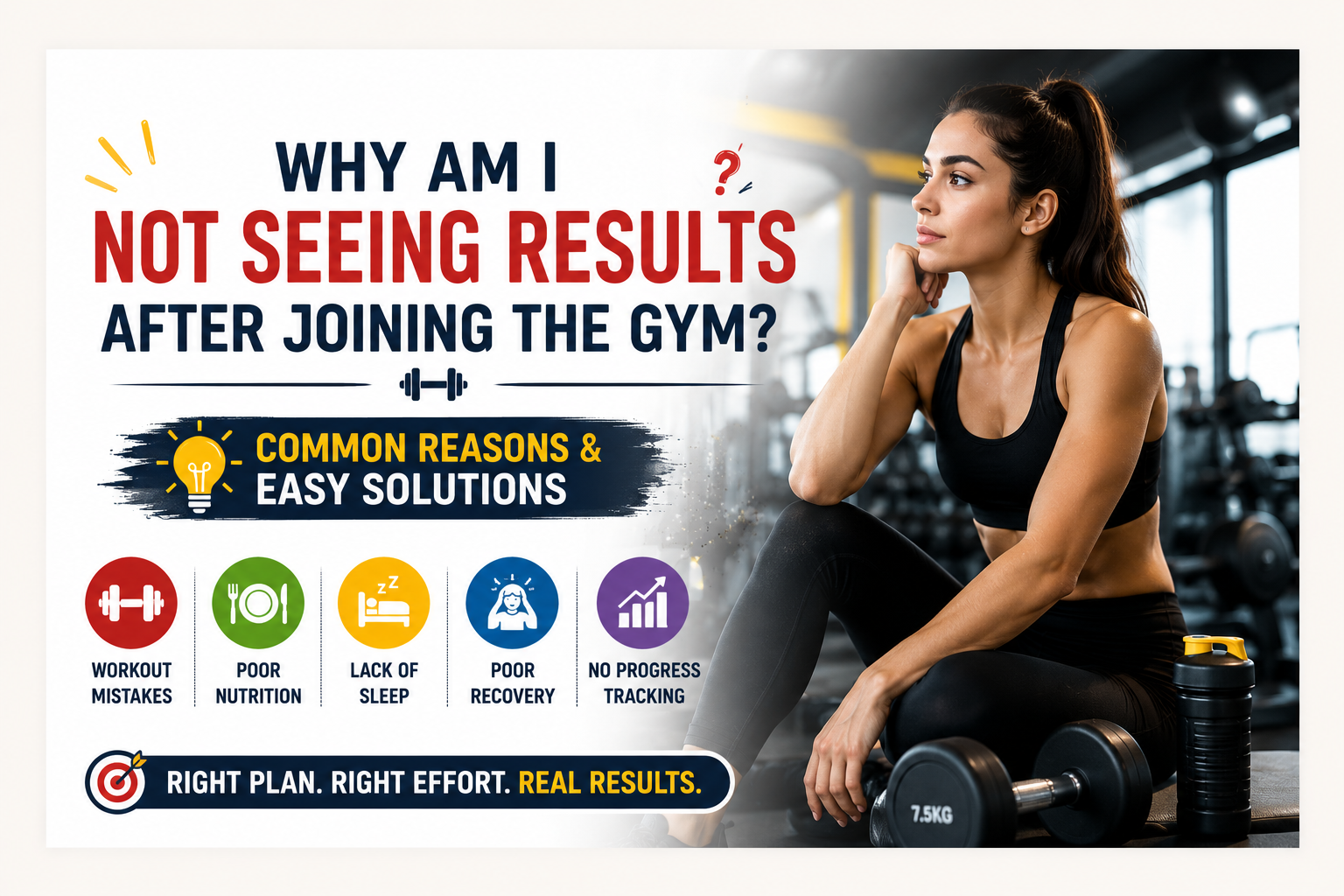
Joining a gym is a great first step toward better health and fitness. But many people feel disappointed when they do not see visible results after a few weeks.
You may be working out regularly, but the weighing scale may not change. You may feel stronger, but your body may look almost the same. Sometimes, you may even gain a little weight after starting your workouts.
This does not always mean that your workout is not working.
Fitness results take time, consistency, proper nutrition, recovery, and the right exercise plan. Everyone’s body responds differently to exercise.
In this article, we will explain the most common reasons why you may not be seeing results after joining the gym and what you can do to improve your progress.
1. You Have Not Given Your Body Enough Time
One of the biggest mistakes beginners make is expecting quick results.
You may see fitness videos online showing dramatic changes in a few weeks, but real progress is usually slower.
Your body needs time to adapt to exercise.
In the beginning, you may notice:
- Better energy
- Improved strength
- Better stamina
- Less tiredness
- Better sleep
Visible changes may take longer.
Instead of checking your body every few days, focus on your progress over several weeks and months.
2. Your Workout Is Not Consistent
Going to the gym once or twice and then taking several days off will make progress difficult.
Your body needs regular training to improve.
Consistency does not mean you have to exercise for hours every day. A simple workout routine followed regularly can be more useful than an intense workout that you do only occasionally.
Try to create a realistic gym schedule that you can follow for the long term.
3. Your Diet Does Not Match Your Goal
Exercise is only one part of fitness.
If your goal is weight loss but you regularly eat more calories than your body uses, losing fat can be difficult.
Similarly, if you want to build muscle but do not eat enough protein and calories, muscle growth may be slower.
Your diet should match your goal.
For example:
Weight loss: Focus on a balanced diet and appropriate calorie intake.
Muscle gain: Eat enough protein, calories, and nutritious foods to support muscle growth.
4. You Are Not Eating Enough Protein
Protein is important for muscle repair and recovery.
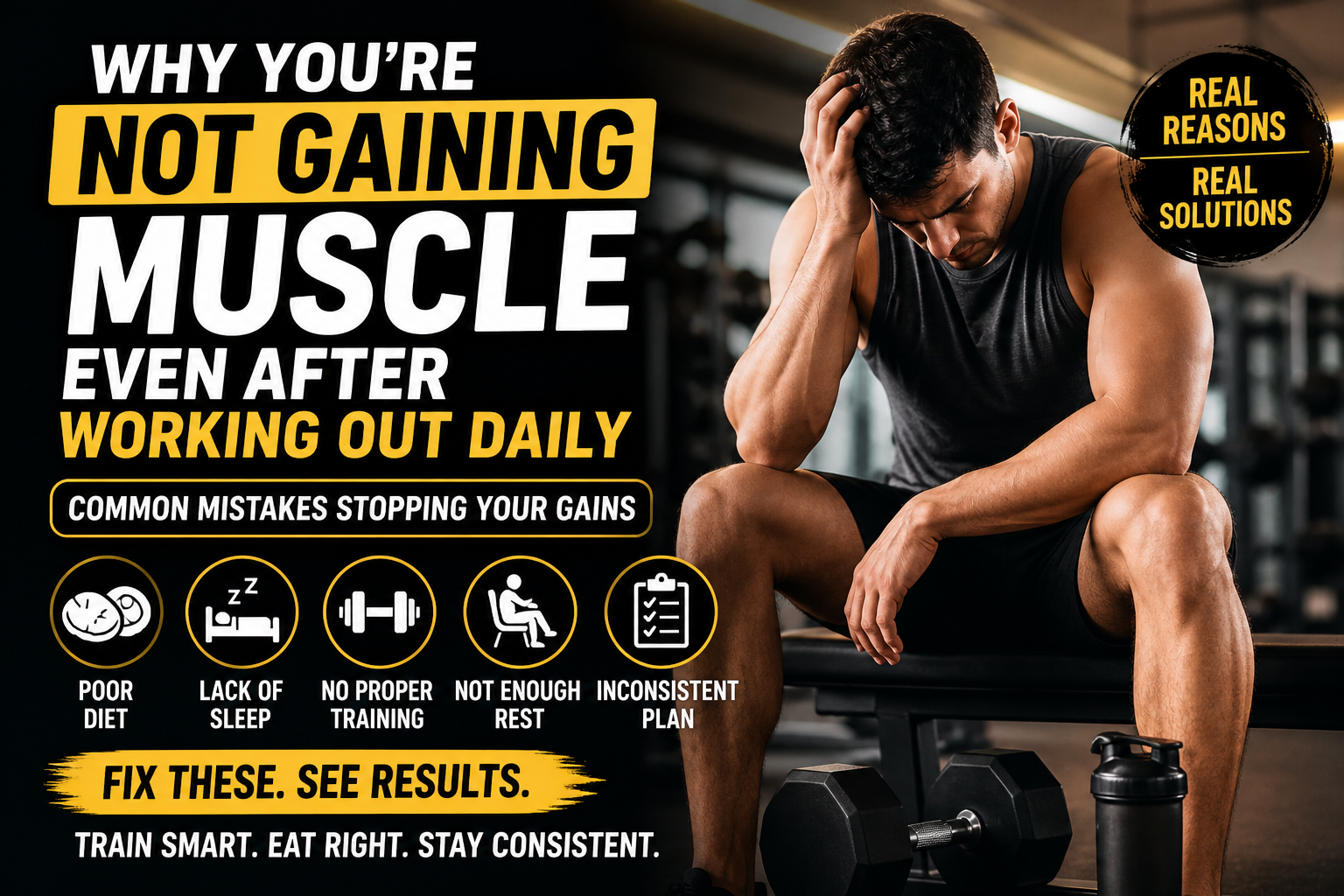
Strength training puts stress on your muscles. Your body needs protein to repair and build them.
Good protein sources include:
- Eggs
- Paneer
- Milk
- Yogurt
- Chicken
- Fish
- Lentils
- Beans
- Tofu
- Soy products
Your individual protein needs depend on factors such as body weight, activity level, age, and fitness goals.
5. You Are Doing the Same Workout for Too Long
Your body adapts to exercise.
If you always perform the same exercises with the same weight and repetitions, your progress may slow down.
This is why progressive overload is important.
Over time, you can gradually increase:
- Weight
- Repetitions
- Sets
- Training difficulty
This should be done safely and with proper form.
6. Your Exercise Technique Is Incorrect
Doing an exercise incorrectly can reduce its effectiveness and increase the risk of injury.
For example, lifting very heavy weights with poor form is not necessarily better than using a manageable weight with proper technique.
If you are unsure about an exercise, ask a qualified trainer to check your form.
7. You Are Not Getting Enough Sleep
Sleep is an important part of fitness recovery.
Your body needs rest after exercise to repair muscles and restore energy.
Poor sleep can affect:
- Energy
- Workout performance
- Recovery
- Hunger
- Motivation
Try to maintain a regular sleep schedule and give your body enough time to recover.
8. You Are Not Taking Rest Days
More exercise is not always better.
Your body needs recovery between difficult workouts.
Training hard every day without enough recovery can leave you tired and may reduce workout quality.
Rest days allow your muscles and body to recover.
9. You Are Only Looking at Your Weight
The weighing scale does not tell the whole story.
You can lose body fat while gaining muscle. In this situation, your weight may change very little even though your body composition is improving.
Look at other signs of progress:
- Waist measurement
- Strength
- Fitness level
- Clothing fit
- Workout performance
- Progress photos
- Energy levels
These can give you a better picture of your results.
10. You Are Not Tracking Your Progress
If you do not track your workouts, it can be difficult to know whether you are improving.
Keep a simple record of:
- Exercises
- Weight lifted
- Repetitions
- Sets
- Body measurements
- Body weight
Tracking your progress can help you identify what is working and what needs to change.
11. You Are Expecting Spot Reduction
Many people want to lose fat from one specific area, such as the stomach.
Unfortunately, you cannot choose exactly where your body loses fat first.
A combination of regular exercise, strength training, physical activity, and a balanced diet can help reduce overall body fat.
With time, your body shape will change.
12. Stress Can Affect Your Progress
High levels of stress can make fitness more difficult.
Stress may affect your:
- Sleep
- Appetite
- Energy
- Motivation
- Food choices
Managing stress through exercise, relaxation, good sleep, and healthy lifestyle habits can support your fitness journey.
What Should You Do If You Are Not Seeing Results?
First, do not give up.
Review your routine and ask yourself:
- Am I exercising consistently?
- Is my diet suitable for my goal?
- Am I eating enough protein?
- Am I sleeping well?
- Am I following the correct exercise technique?
- Am I gradually increasing the difficulty of my workouts?
- Am I giving my body enough recovery time?
- Am I tracking progress beyond just body weight?
If you are unsure, getting guidance from a qualified fitness professional can help you create a safer and more suitable plan.
Final Thoughts
Not seeing immediate results after joining a gym is common. Fitness is a gradual process, not a quick change.
The most important things are consistency, proper training, balanced nutrition, enough sleep, and recovery.
Do not compare your progress with someone else’s. Your starting point, lifestyle, genetics, fitness level, and goals are different.
Stay patient and focus on becoming healthier and stronger one step at a time.
At Bodyzone Fitness & Spa, professional guidance and a structured fitness routine can help members stay consistent and work toward their individual fitness goals.
FAQs
Why am I not seeing results after joining the gym?
You may need more time, better workout consistency, improved nutrition, proper recovery, or a more suitable exercise plan.
How long does it take to see gym results?
Some people notice improvements in energy and strength within a few weeks, while visible body changes can take several weeks or months.
Why am I gaining weight after starting the gym?
Weight can change because of muscle gain, water retention, food intake, or other factors. Body weight alone does not always show your fitness progress.
Can I lose belly fat by doing only abdominal exercises?
Abdominal exercises strengthen your core but cannot specifically remove belly fat. Overall fat loss comes from a suitable diet and regular physical activity.
How important is protein for gym results?
Protein supports muscle repair and growth, making it an important part of a balanced fitness diet.
Can lack of sleep stop fitness progress?
Poor sleep can affect energy, recovery, workout performance, and appetite, which may make reaching your fitness goals harder.
Should I work out every day?
Not necessarily. Your routine should include appropriate recovery and rest, especially after hard training sessions.
How can I track my gym progress?
Track your strength, repetitions, body measurements, progress photos, energy levels, and workout consistency rather than relying only on the weighing scale.
Do beginners need a personal trainer?
A qualified trainer can help beginners learn proper exercise techniques, understand gym equipment, and follow a structured workout plan.
Leave a Reply