
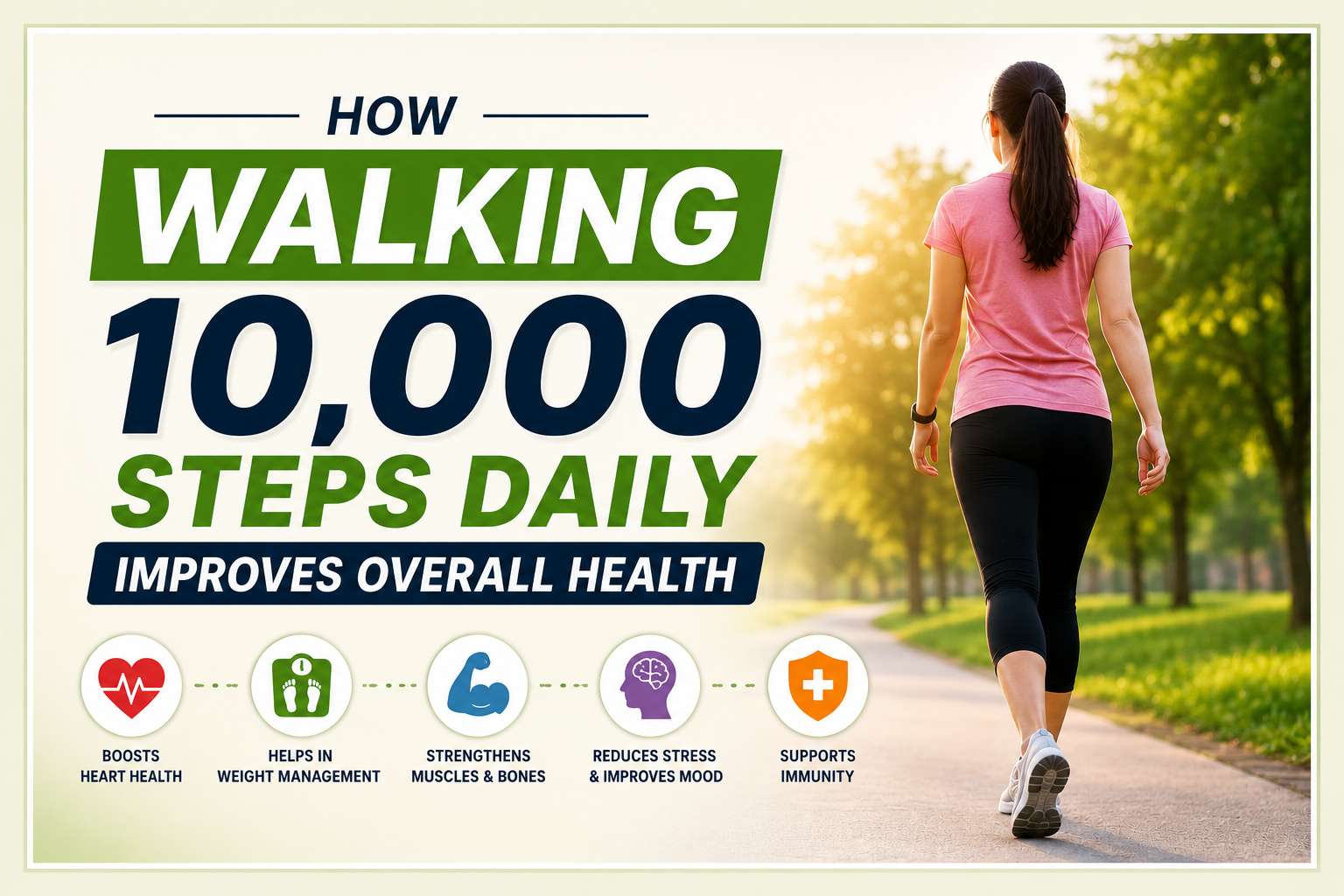
Walking is one of the easiest and safest forms of exercise. You do not need expensive equipment, a gym membership, or advanced fitness skills. All you need is a comfortable pair of shoes and the willingness to move.
For many years, fitness experts have encouraged people to walk more every day. One goal that has become very popular is walking 10,000 steps daily. While this number is not a rule that everyone must follow, it is a simple target that helps many people stay active.
As someone who has worked with fitness routines and healthy lifestyle habits for many years, I have seen one important truth: people who move regularly usually feel healthier, have more energy, and stay active for longer. Walking is one of the easiest habits to build, and it can benefit people of almost every age.
In this guide, you will learn how walking 10,000 steps daily can improve your health, support weight management, boost mental well-being, and complement your fitness journey.

What Does 10,000 Steps Mean?
Walking 10,000 steps is roughly equal to 7–8 kilometers (4–5 miles) for many adults, although the exact distance depends on your height and stride length.
You do not need to complete all 10,000 steps at one time.
You can divide them throughout the day by:
- Walking in the morning
- Taking short walks during work breaks
- Using stairs instead of elevators
- Walking after meals
- Taking an evening walk
Small walks throughout the day add up quickly.
1. Supports Heart Health
Your heart is a muscle.
Regular walking helps keep it active.
Walking every day may help:
- Improve blood circulation
- Support healthy blood pressure
- Improve heart fitness
- Increase stamina
A healthy heart helps you stay active and energetic.
2. Helps with Weight Management
Walking burns calories.
Combined with healthy eating, regular walking can help support a healthy body weight.
Walking also increases your daily movement, which is important if you spend many hours sitting.
3. Improves Mental Health
Walking is not only good for your body.
It also helps your mind.
Many people feel:
- Less stressed
- More relaxed
- Happier
- More focused
Walking outdoors can be especially refreshing.
4. Increases Energy Levels
It may sound surprising, but moving your body actually gives you more energy.
People who walk regularly often feel:
- Less tired
- More active
- Better prepared for daily tasks
Regular movement improves overall fitness.
5. Helps Improve Sleep
Good sleep is important for recovery.
Walking every day may help you:
- Fall asleep more easily
- Sleep more comfortably
- Wake up feeling refreshed
Better sleep also supports muscle recovery and overall health.
6. Strengthens Muscles and Bones
Walking works several muscle groups, including your:
- Legs
- Hips
- Core
- Lower back
It also helps keep your joints moving and supports healthy bones.
7. Improves Digestion
Walking after meals is a simple habit that may help digestion.
Many people enjoy a short walk after lunch or dinner because it helps them feel lighter.
8. Reduces Stress
Walking provides a break from busy daily life.
Fresh air, sunlight, and movement can help reduce stress and improve your mood.
9. Improves Balance and Mobility
As you age, balance becomes more important.
Walking helps improve coordination and keeps your body moving naturally.
This supports long-term mobility and independence.
10. Supports Better Blood Sugar Control
Regular physical activity helps your body use energy more efficiently.
Walking after meals may help support healthy blood sugar management as part of an overall healthy lifestyle.
Is 10,000 Steps Necessary?
No.
The number 10,000 is a helpful goal, but it is not a magic number.
If you currently walk:
- 2,000 steps
- 4,000 steps
- 6,000 steps
Start there.
Gradually increase your activity.
Even adding 1,000 to 2,000 extra steps each day can be a positive change.
Consistency matters more than perfection.
Easy Ways to Reach 10,000 Steps
Try these simple habits:
- Park farther away.
- Walk while talking on the phone.
- Use stairs.
- Take a short walk after meals.
- Walk during lunch breaks.
- Walk with family or friends.
- Walk your pet.
- Take evening walks.
Small changes create big results over time.
Walking vs Running
Both are healthy.
Walking
Best for:
- Beginners
- Seniors
- Weight management
- Recovery days
- Joint-friendly exercise
Running
Best for:
- Higher intensity workouts
- Building endurance
- Burning more calories in less time
Choose the activity that suits your body and goals.
Combine Walking with Strength Training
Walking improves overall health, but strength training helps build muscle and improve bone strength.
A balanced fitness plan may include:
- Walking
- Strength training
- Stretching
- Yoga
- Recovery
- Healthy nutrition
This combination supports long-term fitness.
Walking and Recovery
Walking is also a great form of active recovery.
On rest days, a gentle walk helps:
- Improve blood circulation
- Reduce stiffness
- Keep the body moving
- Support recovery after workouts
Healthy Lifestyle Tips
Walking works even better when combined with:
- Healthy meals
- Enough protein
- Fruits and vegetables
- Drinking enough water
- Quality sleep
- Regular exercise
- Stress management
Healthy habits work together.
Fitness at Bodyzone Fitness & Spa
At Bodyzone Fitness & Spa, we encourage members to stay active both inside and outside the gym.
Walking is an excellent daily habit that complements:
- Strength Training
- Personal Training
- Yoga Classes
- Aerobics Classes
- Bhangra Fitness Classes
- Salsa Classes
- Sauna
- Steam Therapy
- Stretching
- Recovery Programs
Building a healthier lifestyle is about creating habits you can maintain for years—not just for a few weeks.
Final Thoughts
Walking 10,000 steps daily is one of the simplest ways to improve your overall health.
It supports your heart, helps with weight management, boosts energy, improves mood, and keeps your body active.
Remember, you do not have to reach 10,000 steps on your first day. Start with what you can do today and build the habit over time.
Small daily actions often lead to the biggest long-term results.
The most important step is simply to start walking.
Frequently Asked Questions (FAQs)
Is walking 10,000 steps every day healthy?
Yes. For many people, regular walking is a safe and effective way to stay active and improve overall health.
Can walking help with weight loss?
Walking burns calories and, when combined with a balanced diet, can support weight management.
Do I have to walk 10,000 steps at one time?
No. You can spread your steps throughout the day.
Is walking better than running?
Both have benefits. Walking is easier on the joints, while running is more intense. The best choice depends on your fitness level and goals.
Can walking improve mental health?
Yes. Many people find that regular walking helps reduce stress, improve mood, and increase mental well-being.
Is walking enough for fitness?
Walking is excellent for overall health. Combining it with strength training, stretching, and balanced nutrition provides a more complete fitness routine.
Can I walk every day?
Yes. Most healthy adults can walk daily. If you have a medical condition or concerns about exercise, consult a healthcare professional before starting a new routine.
Leave a Reply