
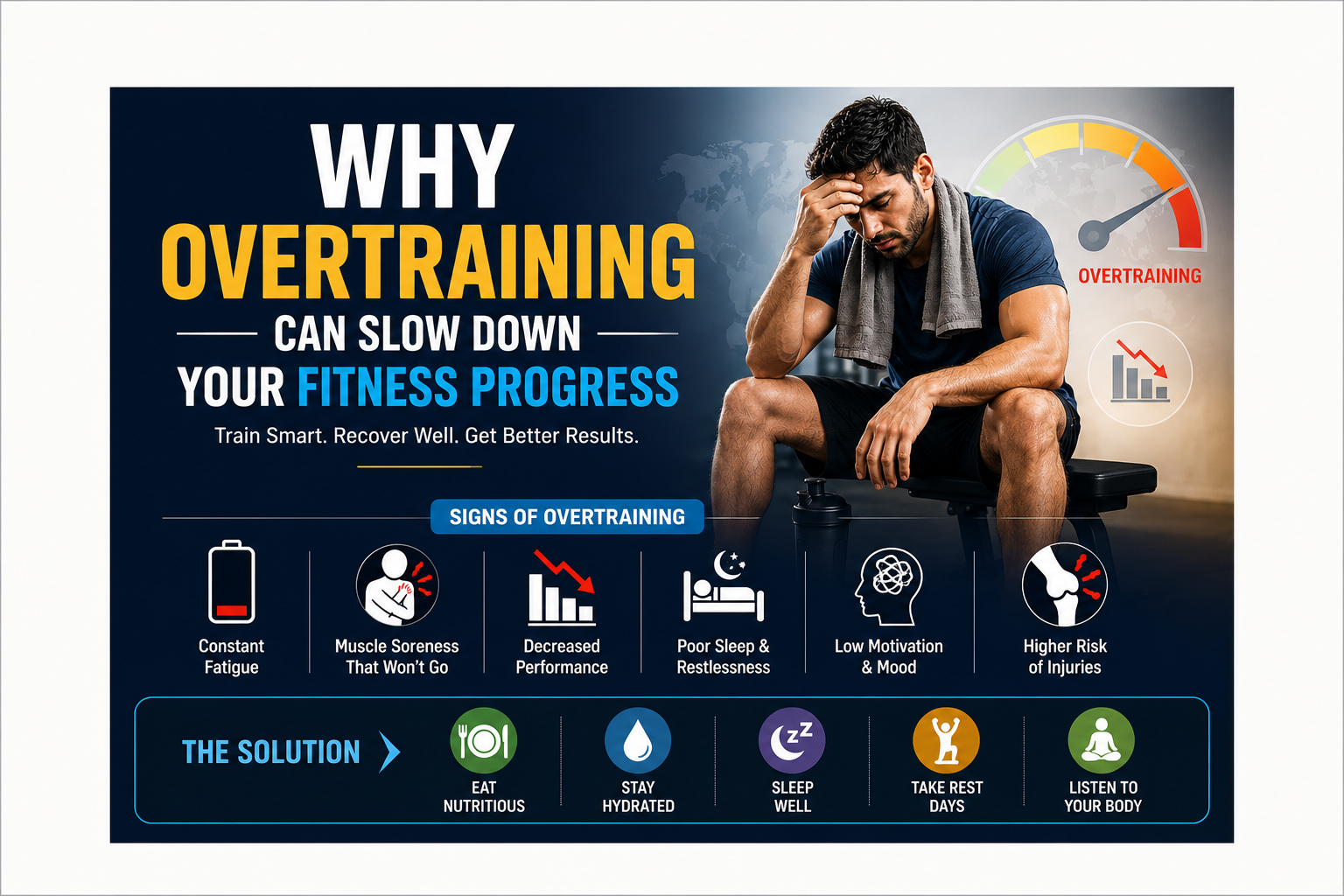
Many people believe that the more they exercise, the faster they will achieve their fitness goals. While regular workouts are important, too much exercise without enough recovery can actually slow your progress.
This condition is called overtraining.
After helping people with fitness for many years, one thing becomes very clear: your body grows stronger during recovery, not while you are exercising. Every workout creates stress on your muscles. Rest, good nutrition, and sleep allow your body to repair and become stronger.
If you train hard every day without giving your body enough time to recover, you may start feeling tired, weak, and frustrated because your results stop improving.
In this article, you will learn what overtraining is, the warning signs, how it affects your body, and how to recover properly.
What Is Overtraining?
Overtraining happens when you exercise more than your body can recover from.
Your muscles, joints, and nervous system need time to repair after every workout.
If you continue training hard without enough recovery, your body cannot keep up with the stress.
Instead of becoming stronger, you may actually become weaker.
Why Recovery Is Just as Important as Exercise
Think of your body like a mobile phone.
If you keep using it without charging it, the battery will eventually run out.
Your body works the same way.
Exercise uses your energy.
Recovery recharges your body.
A complete fitness plan always includes:
- Regular exercise
- Healthy nutrition
- Enough water
- Quality sleep
- Rest days
- Stress management
Ignoring recovery often leads to slower progress.
Signs You May Be Overtraining
Your body gives warning signs when it needs more rest.
Watch for these common symptoms.
1. Constant Muscle Soreness
Feeling sore for one or two days after exercise is normal.
But if your muscles stay sore all the time, your body may not be recovering properly.
2. Feeling Tired Every Day
One of the biggest signs of overtraining is constant tiredness.
Even after sleeping, you may still feel exhausted.
3. Poor Workout Performance
You may notice:
- Lifting lighter weights
- Running slower
- Feeling weak
- Losing stamina
This often means your body needs recovery.
4. Difficulty Sleeping
Many people think exercising more improves sleep.
However, too much training can make it harder to fall asleep or stay asleep.
Poor sleep also slows recovery.
5. Loss of Motivation
If you suddenly stop enjoying your workouts, overtraining could be one reason.
You may feel mentally tired instead of excited to exercise.
6. More Frequent Injuries
When muscles stay tired, your risk of injury increases.
Common injuries include:
- Muscle strains
- Joint pain
- Shoulder pain
- Knee pain
- Back pain
Recovery helps lower these risks.
7. Longer Recovery Time
If every workout leaves you sore for several days, your body may not be recovering well.
Recovery should improve as your fitness improves.
How Overtraining Affects Your Body
Slows Muscle Growth
Muscles grow during recovery.
Without enough rest, your muscles cannot repair properly.
This slows muscle development.
Reduces Strength
Your strength may stop improving or even decrease.
Many people think they need to train harder.
In reality, they often need more recovery.
Increases Stress
Exercise is a healthy form of stress.
Too much exercise without recovery creates extra physical and mental stress.
This can affect both your body and your mood.
Lowers Energy
Your energy levels may stay low throughout the day.
Simple daily activities may start feeling difficult.
Increases Risk of Burnout
Burnout happens when both your body and mind become exhausted.
Instead of enjoying fitness, you begin to see it as a burden.
Common Causes of Overtraining
Several habits can lead to overtraining.
- Exercising every day without rest
- Lifting heavy weights too often
- Not eating enough protein
- Poor hydration
- Lack of sleep
- Ignoring recovery days
- Training through pain
- Trying to progress too quickly
How to Prevent Overtraining
Take Rest Days
Rest days are not lazy days.
They allow your muscles to recover and grow.
Most people benefit from at least one or two recovery days each week.
Sleep Well
Aim for 7 to 9 hours of quality sleep every night.
Sleep is one of the best recovery tools.
Eat Healthy Foods
Your body needs nutrients after exercise.
Include:
- Protein
- Healthy carbohydrates
- Fruits
- Vegetables
- Healthy fats
Balanced nutrition supports recovery.
Drink Enough Water
Water helps:
- Prevent dehydration
- Support muscles
- Improve recovery
- Maintain energy
Hydration is essential for every fitness goal.
Listen to Your Body
Not every day needs to be an intense workout.
If your body feels unusually tired, take a lighter workout or a rest day.
Recovery is part of smart training.
Stretch After Workouts
Stretching helps improve flexibility and reduce muscle tightness.
It also supports better movement.
Active Recovery
Recovery does not always mean doing nothing.
Active recovery includes light activities such as:
- Walking
- Yoga
- Gentle stretching
- Easy cycling
- Light swimming
These activities keep your body moving without adding too much stress.
Recovery at Bodyzone Fitness & Spa
At Bodyzone Fitness & Spa, we believe that smart training gives better results than simply training harder.
Our experienced trainers help members create balanced workout plans that include:
- Strength training
- Cardio
- Stretching
- Recovery
- Personal training
- Yoga classes
- Aerobics classes
- Bhangra fitness classes
- Salsa classes
- Sauna
- Steam therapy
Recovery is an important part of every fitness journey. A balanced approach helps reduce injury risk, improve consistency, and support long-term progress.
Expert Tips for Better Recovery
Here are some simple tips I recommend to every gym member:
✅ Do not compare yourself with others.
✅ Progress takes time.
✅ Eat enough protein every day.
✅ Stay hydrated.
✅ Sleep well every night.
✅ Take recovery days seriously.
✅ Focus on consistency instead of perfection.
Remember, your goal is not to train the hardest—it is to train the smartest.
Final Thoughts
Many people believe that working out every day without rest will help them achieve faster results.
In reality, overtraining often does the opposite.
Your muscles need time to recover, repair, and become stronger.
A balanced fitness routine includes exercise, healthy food, enough water, proper sleep, stretching, and recovery.
When you take care of your body, your body will reward you with better performance, more energy, and long-term fitness success.
Fitness is a marathon, not a sprint.
Stay patient, stay consistent, and let recovery become part of your training plan.
Frequently Asked Questions (FAQs)
What is overtraining?
Overtraining happens when you exercise more than your body can recover from, leading to tiredness, poor performance, and slower progress.
What are the signs of overtraining?
Common signs include constant muscle soreness, fatigue, poor performance, trouble sleeping, low motivation, and frequent injuries.
Can overtraining stop muscle growth?
Yes. Without enough recovery, muscles cannot repair properly, which can slow muscle growth and strength gains.
How many rest days should I take?
The right number depends on your fitness level and training plan. Many people benefit from one or two rest or active recovery days each week.
Is it okay to exercise every day?
Light activity may be fine for some people, but intense workouts every day without recovery can increase the risk of overtraining.
What foods help with recovery?
Protein-rich foods, healthy carbohydrates, fruits, vegetables, healthy fats, and plenty of water all support recovery.
Can poor sleep affect fitness progress?
Yes. Sleep plays an important role in muscle repair, energy levels, and overall recovery.
Leave a Reply