
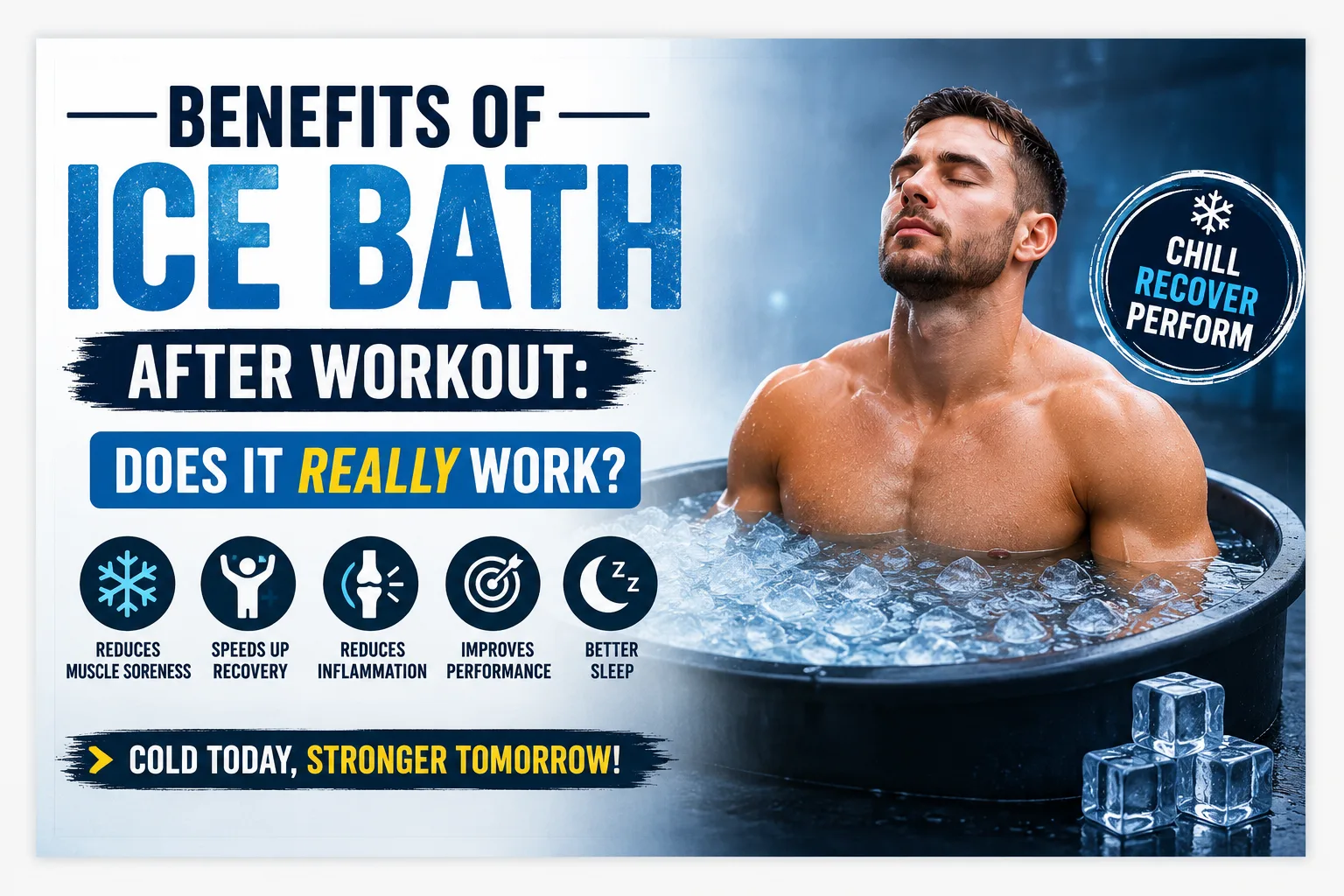
If you have watched professional athletes or fitness influencers, you have probably seen them sitting in a tub filled with ice and cold water after a workout. This is called an ice bath, also known as cold water immersion.
Many people believe ice baths help muscles recover faster and reduce soreness after exercise. But does it really work?
The answer is that ice baths may help some people recover after certain types of intense exercise, but they are not necessary for everyone. They are only one part of a good recovery plan.
In this guide, you will learn how ice baths work, their possible benefits, when to use them, and who should avoid them.
What Is an Ice Bath?
An ice bath is a recovery method where you sit in cold water for a short period after exercise.
The water is usually much colder than normal bath water.
The goal is to cool the body after intense physical activity.
Professional athletes often use ice baths after:
- Heavy gym workouts
- Long-distance running
- Football matches
- Cycling events
- Sports competitions
Many regular gym members also try ice baths as part of their recovery routine.
Why Recovery Is Important
Exercise creates small tears in your muscles.
This is a normal process that helps muscles become stronger.
However, your muscles need time to recover.
Recovery includes:
- Healthy food
- Protein
- Water
- Good sleep
- Stretching
- Rest days
Recovery is where your body becomes stronger.
An ice bath may be one tool that supports this recovery process.
How Does an Ice Bath Work?
Cold water causes blood vessels near the skin to narrow.
After you leave the cold water and warm up again, blood flow returns to normal.
Researchers are still studying exactly how this affects recovery, but many athletes report feeling refreshed after using ice baths.
Benefits of Ice Bath After Workout
1. May Help Reduce Muscle Soreness
One of the main reasons people use ice baths is to reduce muscle soreness after intense exercise.
Many athletes say they feel less sore after cold-water immersion.
This can make it easier to return to training.
2. Helps Cool the Body
After exercising in hot weather or after a long workout, your body temperature rises.
An ice bath helps cool your body quickly.
This can feel refreshing after outdoor sports.
3. Supports Recovery After Intense Exercise
Some studies suggest that cold water immersion may help people recover after very demanding workouts.
It is commonly used after sports competitions or high-intensity training.
4. May Help Reduce Swelling
Hard training can sometimes cause temporary swelling in muscles and joints.
Cold therapy may help reduce this swelling for some people.
5. Improves Mental Freshness
Many people say they feel refreshed and more alert after an ice bath.
The cold water creates a feeling of freshness that some people enjoy.
6. Helps Athletes Prepare for the Next Training Session
Professional athletes often train multiple times a day.
If an ice bath helps reduce soreness, it may make it easier to perform the next training session comfortably.
7. Encourages Better Recovery Habits
People who include recovery in their fitness routine often also focus on:
- Better sleep
- Healthy eating
- Hydration
- Stretching
An ice bath can remind you that recovery is just as important as exercise.
Does an Ice Bath Build Muscle?
An ice bath does not directly build muscle.
Muscle growth mainly depends on:
- Strength training
- Protein intake
- Good nutrition
- Quality sleep
- Progressive overload
- Recovery
An ice bath is only one recovery method.
It should not replace proper nutrition or rest.
When Should You Take an Ice Bath?
An ice bath may be useful after:
- Heavy leg workouts
- Long-distance running
- Sports competitions
- High-intensity interval training (HIIT)
- Outdoor exercise in hot weather
It is usually not necessary after every workout, especially after light or moderate exercise.
Who Should Avoid Ice Baths?
Ice baths are not suitable for everyone.
People with the following conditions should speak to a healthcare professional before trying cold-water therapy:
- Heart disease
- Poor blood circulation
- Uncontrolled high blood pressure
- Certain nerve conditions
- Other serious medical conditions
If you feel dizzy, numb, or unwell during an ice bath, get out immediately.
Ice Bath vs Sauna
Both methods are popular recovery tools.
Ice Bath
Best for:
- Cooling down
- Feeling refreshed
- Recovery after intense exercise
Sauna
Best for:
- Relaxing muscles
- Reducing stress
- Improving overall relaxation
- Supporting wellness after workouts
Many premium fitness centers offer sauna facilities as part of their recovery services.
Other Ways to Recover After Exercise
An ice bath is only one part of recovery.
Good recovery also includes:
Healthy Nutrition
Eat protein and healthy carbohydrates after workouts.
Examples:
- Eggs
- Chicken
- Paneer
- Greek yogurt
- Oats
- Rice
- Fruits
Drink Enough Water
Water supports muscles and replaces fluids lost through sweat.
Stay hydrated before and after exercise.
Get Enough Sleep
Sleep is one of the most important recovery tools.
Aim for 7 to 9 hours of quality sleep each night.
Stretch After Exercise
Stretching helps improve flexibility and reduce muscle tightness.
Take Rest Days
Your muscles need time to recover.
Rest days are important for long-term fitness progress.
Recovery at Bodyzone Fitness & Spa
At Bodyzone Fitness & Spa, we believe that recovery is just as important as training.
Along with modern gym equipment and expert trainers, members are encouraged to build healthy recovery habits.
Our wellness-focused facilities include:
- Premium Gym Equipment
- Personal Training
- Yoga Classes
- Aerobics Classes
- Bhangra Fitness Classes
- Salsa Classes
- Sauna
- Steam Therapy
- Stretching Guidance
- Recovery Support
Combining exercise with proper recovery helps members stay consistent, reduce the risk of injury, and achieve long-term fitness goals.
Final Thoughts
Ice baths have become popular among athletes and fitness enthusiasts because they may help reduce muscle soreness and support recovery after intense exercise.
However, they are **not a magic solution
However, they are not a magic solution.
The best recovery plan includes:
- Regular exercise
- Healthy food
- Protein
- Hydration
- Stretching
- Rest days
- Quality sleep
If you decide to try an ice bath, use it safely and listen to your body. Recovery is different for everyone, and finding the routine that works for you is the key to long-term success.
Frequently Asked Questions (FAQs)
What is an ice bath?
An ice bath is a recovery method where you sit in cold water for a short time after exercise.
Do ice baths really work?
Ice baths may help reduce muscle soreness and support recovery after intense exercise for some people. Results can vary from person to person.
Is an ice bath good after every workout?
Not always. Ice baths are generally more useful after very intense training sessions, long runs, or sports competitions than after light workouts.
How long should you stay in an ice bath?
Many people keep sessions short. If you are new to ice baths, start cautiously and stop immediately if you feel unwell. If you have any health concerns, consult a healthcare professional before trying one.
Is an ice bath better than a sauna?
They serve different purposes. Ice baths focus on cooling the body after intense exercise, while saunas focus on relaxation and heat therapy.
Can an ice bath help with muscle soreness?
Many athletes report less soreness after using an ice bath, especially after demanding workouts.
Who should avoid ice baths?
People with heart conditions, poor circulation, uncontrolled high blood pressure, or other serious medical concerns should seek medical advice before using cold-water therapy.
Does Bodyzone Fitness & Spa offer recovery facilities?
Yes. Bodyzone Fitness & Spa offers Sauna, Steam Therapy, Personal Training, Yoga, Aerobics, Bhangra Fitness Classes, Salsa Classes, and professional fitness guidance to support a complete recovery-focused fitness experience.
Leave a Reply