
Exercise is one of the best ways to stay healthy, build strength, lose weight, and improve fitness. But many people make one common mistake—they skip stretching.
Some people go straight to lifting weights or running without preparing their muscles. Others finish their workout and leave the gym without cooling down. This can increase the chance of muscle tightness, pain, and even injury.
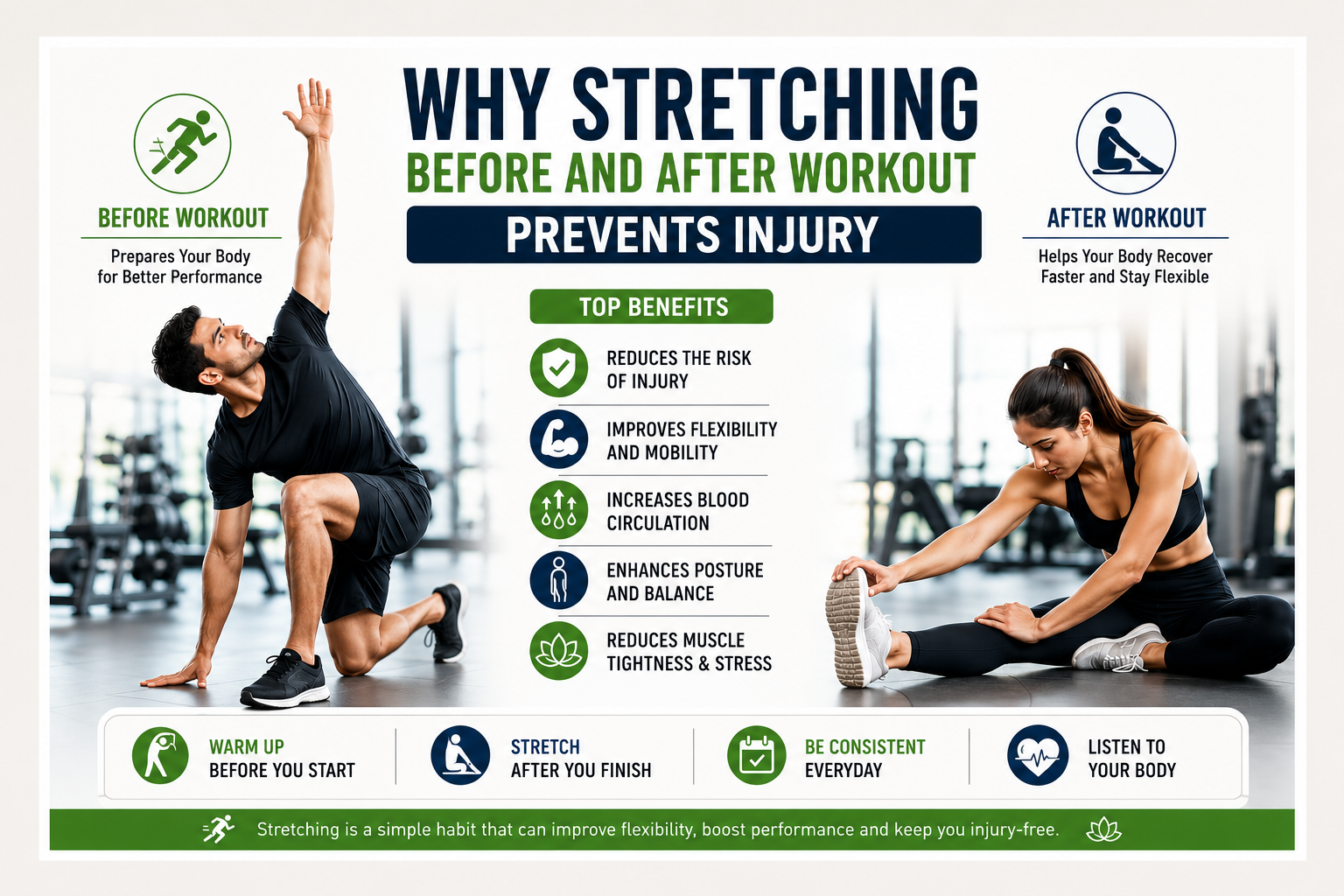
Stretching before and after your workout is a simple habit that can make a big difference. It helps your body move better, reduces stiffness, improves flexibility, and supports faster recovery.
In this article, you will learn why stretching before and after a workout prevents injury, the different types of stretching, and how to include stretching in your daily fitness routine.
What is Stretching?
Stretching means gently moving your muscles and joints to improve flexibility and movement.
It prepares your body for exercise and helps your muscles relax after a workout.
Stretching is not only for athletes. Everyone can benefit from it, whether you are a beginner, a regular gym member, or someone who simply wants to stay active.
Why is Stretching Important?
Your muscles become tight after sitting for long hours, driving, working on a computer, or exercising.
Stretching helps:
- Improve flexibility
- Increase movement
- Reduce muscle tightness
- Improve posture
- Lower the risk of injury
It only takes a few minutes but gives long-term benefits.
Stretching Before Workout
Before exercise, your body needs to prepare for movement.
Stretching before a workout helps your muscles become ready for physical activity.
Dynamic stretching (controlled movements that warm up the body) is usually the best choice before exercise.
1. Warms Up Your Muscles
Cold muscles are less flexible.
When muscles are warm, they move more easily.
A proper warm-up increases blood flow and prepares your body for exercise.
This helps reduce the risk of muscle strain.
2. Improves Flexibility
Flexible muscles move better.
Better flexibility helps you perform exercises with correct form.
Good movement also makes workouts feel easier.
3. Improves Joint Movement
Stretching helps your joints move freely.
Healthy joint movement helps during exercises like:
- Squats
- Lunges
- Running
- Push-ups
- Weight lifting
Better movement reduces unnecessary stress on the body.
4. Helps Improve Workout Performance
When your muscles are ready, you perform better.
Stretching before exercise may help you:
- Lift weights comfortably
- Move with better control
- Improve balance
- Exercise with confidence
5. Reduces the Risk of Injury
One of the biggest benefits of stretching is injury prevention.
Prepared muscles are less likely to become strained during exercise.
Stretching also helps improve body awareness, making movements safer.
Stretching After Workout
Your workout does not end after your last exercise.
Cooling down is also important.
After exercise, your muscles become tight and tired.
Gentle stretching after your workout helps your body return to a relaxed state.
Static stretching (holding a stretch for a short time) is commonly used after workouts.
6. Reduces Muscle Tightness
Exercise causes muscles to tighten.
Stretching helps muscles relax naturally.
This reduces stiffness after training.
7. Supports Faster Recovery
Recovery is where your body becomes stronger.
Stretching helps improve blood circulation after exercise.
Better circulation supports your body’s natural recovery process.
8. Helps Reduce Muscle Soreness
Many people feel sore after a hard workout.
Stretching may help reduce tightness and improve comfort after exercise.
It also helps you feel ready for your next workout.
9. Improves Posture
Poor posture is common among people who sit for long hours.
Stretching helps release tight muscles around:
- Neck
- Shoulders
- Chest
- Back
- Hips
Over time, this can help improve posture.
10. Helps You Relax
Stretching is not only good for your body.
It also helps your mind.
Many people feel calm and relaxed after spending a few minutes stretching.
This is a great way to finish your workout.
Common Areas You Should Stretch
A complete stretching routine should include:
Neck
Reduces stiffness from computer work.
Shoulders
Improves upper body movement.
Chest
Helps improve posture.
Back
Supports spine health.
Hips
Improves movement and flexibility.
Hamstrings
Helps during running and leg workouts.
Quadriceps
Supports knee movement.
Calves
Important for walking, running, and jumping.
Dynamic vs Static Stretching
Dynamic Stretching (Before Workout)
Dynamic stretching involves gentle movements that prepare your body for exercise.
Examples:
- Arm circles
- Leg swings
- Walking lunges
- High knees
- Hip circles
These movements help warm up your muscles.
Static Stretching (After Workout)
Static stretching means holding a stretch without moving.
Examples:
- Hamstring stretch
- Quad stretch
- Shoulder stretch
- Chest stretch
- Calf stretch
Hold each stretch gently without bouncing.
Common Stretching Mistakes
Avoid these mistakes:
- Skipping stretching completely
- Stretching too quickly
- Bouncing while stretching
- Stretching until you feel pain
- Holding your breath
- Rushing through the routine
Stretching should always feel gentle and controlled.
How Long Should You Stretch?
You do not need a long session.
Most people can benefit from spending:
- 5–10 minutes before a workout for warming up.
- 5–10 minutes after a workout for cooling down.
Being consistent is more important than spending a long time.
Why Stretching is Important at Bodyzone Fitness & Spa
At Bodyzone Fitness & Spa, we believe that fitness is more than lifting weights. A complete fitness routine includes:
- Proper warm-up
- Safe exercise technique
- Stretching before and after workouts
- Strength training
- Recovery
- Good nutrition
- Quality sleep
Our trainers encourage members to include stretching in every workout because it helps improve flexibility, supports better movement, and reduces the risk of injuries. Building healthy habits from the beginning helps you stay active and enjoy long-term fitness.
Final Thoughts
Stretching is one of the simplest and most effective ways to take care of your body.
Just a few minutes before and after exercise can improve flexibility, support better movement, reduce muscle tightness, and lower the risk of injury.
Whether you are new to fitness or have been working out for years, stretching should always be part of your routine.
Healthy habits, regular exercise, proper nutrition, good sleep, and stretching all work together to help you achieve better fitness results.
Frequently Asked Questions (FAQs)
Why is stretching important before a workout?
Stretching prepares your muscles and joints for exercise, improves movement, and helps reduce the risk of injury.
Should I stretch after every workout?
Yes. Stretching after exercise helps relax your muscles, reduce tightness, and support recovery.
How long should I stretch before exercising?
About 5 to 10 minutes of dynamic stretching is enough for most workouts.
Can stretching prevent injuries?
Stretching is one part of injury prevention. Combined with a proper warm-up, correct exercise technique, and gradual training, it helps reduce the risk of injuries.
What is the difference between dynamic and static stretching?
Dynamic stretching uses movement to warm up the body before exercise. Static stretching involves holding a stretch after exercise to help muscles relax.
Does stretching improve flexibility?
Yes. Regular stretching helps improve flexibility and range of motion over time.
Can beginners benefit from stretching?
Absolutely. Stretching is useful for beginners, experienced gym members, athletes, and older adults.
Leave a Reply