
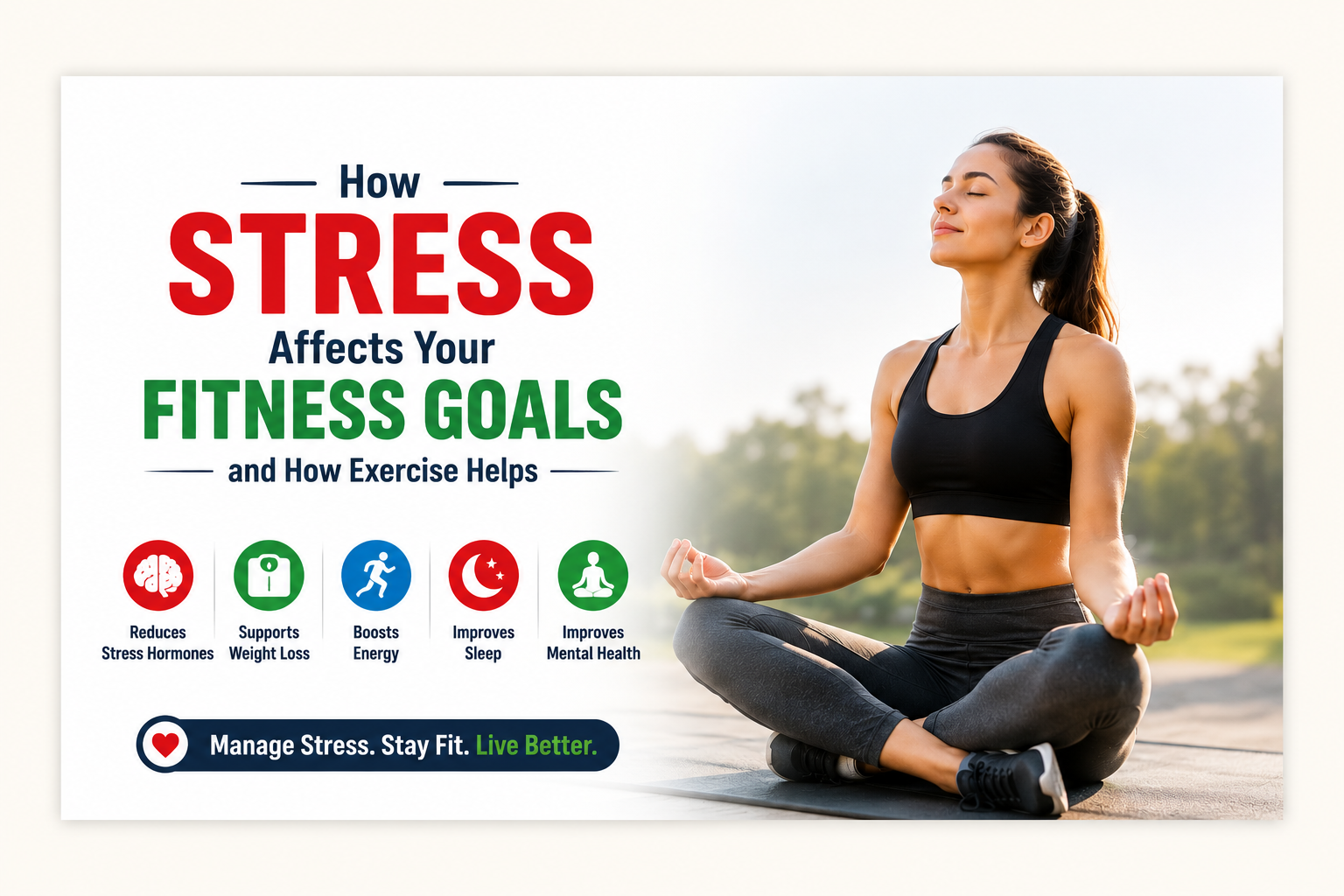
Stress is a normal part of life. Everyone experiences stress because of work, family, studies, finances, or daily responsibilities. A small amount of stress is normal, but long-term stress can affect both your physical and mental health.
If you are trying to lose weight, build muscle, or improve your fitness, stress can slow your progress. It may reduce your energy, affect your sleep, increase cravings, and make it harder to stay motivated.
The good news is that regular exercise is one of the best ways to manage stress. It not only improves your fitness but also helps you feel happier, calmer, and more energetic.
In this article, you’ll learn how stress affects your fitness goals and how exercise can help you stay healthy and active.
What Is Stress?
Stress is your body’s natural response to challenging situations.
When you are stressed, your body releases hormones like cortisol and adrenaline. These hormones prepare your body to respond quickly.
Short-term stress is normal, but if stress continues for a long time, it can negatively affect your health and fitness.
How Stress Affects Your Fitness Goals
1. Makes Weight Loss More Difficult
Long-term stress increases cortisol levels.
High cortisol can:
- Increase appetite
- Cause sugar cravings
- Lead to overeating
- Encourage fat storage, especially around the belly
Even with regular workouts, high stress can make weight loss slower.
2. Slows Muscle Growth
Muscles grow during recovery after exercise.
If you are constantly stressed:
- Recovery becomes slower.
- Muscle repair may take longer.
- Workout performance can decrease.
Managing stress helps your body recover more effectively.
3. Reduces Energy Levels
Stress can make you feel tired throughout the day.
Low energy often leads to:
- Skipping workouts
- Less physical activity
- Reduced motivation
- Poor workout performance
Regular exercise can gradually improve your energy levels.
4. Affects Sleep Quality
Good sleep is essential for fitness.
Stress may cause:
- Difficulty falling asleep
- Frequent waking during the night
- Poor-quality sleep
Without enough sleep, your body cannot recover properly after exercise.
5. Increases Unhealthy Eating Habits
Many people eat more when they feel stressed.
Stress eating often includes:
- Fast food
- Sugary snacks
- Soft drinks
- Fried foods
These habits can make it harder to reach your fitness goals.
6. Reduces Motivation
Stress can affect your mental health.
You may lose interest in:
- Going to the gym
- Walking
- Healthy cooking
- Following your fitness routine
A simple workout can improve your mood and help you stay consistent.
How Exercise Helps Reduce Stress
Exercise is one of the most natural ways to reduce stress.
Physical activity releases chemicals called endorphins, often known as “feel-good hormones.”
These hormones improve mood and reduce feelings of stress.
1. Improves Your Mood
After exercise, many people feel happier and more relaxed.
Regular workouts help reduce:
- Anxiety
- Stress
- Negative thoughts
Even a 30-minute walk can improve your mood.
2. Improves Sleep
Exercise helps your body relax.
People who exercise regularly often:
- Fall asleep faster
- Sleep more deeply
- Wake up feeling refreshed
Better sleep supports muscle recovery and overall health.
3. Boosts Energy
Although exercise uses energy, it also helps improve overall stamina.
Regular physical activity:
- Increases blood circulation
- Improves heart health
- Delivers oxygen to muscles
This helps you feel more energetic throughout the day.
4. Helps Control Weight
Exercise burns calories and supports a healthy metabolism.
Combined with a balanced diet, it can help:
- Reduce body fat
- Maintain a healthy weight
- Improve body composition
5. Builds Self-Confidence
Reaching fitness goals, even small ones, builds confidence.
You may notice:
- Increased strength
- Better posture
- Improved fitness
- Greater self-esteem
These positive changes help reduce stress and improve overall well-being.
6. Keeps Your Mind Focused
Exercise provides a break from daily worries.
Whether you are lifting weights, doing yoga, or walking outdoors, physical activity helps your mind focus on the present moment.
This can reduce mental fatigue and improve concentration.
Best Exercises for Stress Relief
You don’t need intense workouts every day.
These activities are excellent for reducing stress:
Walking
A simple 30-minute walk can improve mood and reduce stress.
Strength Training
Weight training builds muscle while helping release stress.
Yoga
Yoga combines stretching, breathing, and relaxation.
Cycling
Cycling improves heart health and helps clear your mind.
Swimming
Swimming relaxes the body while improving overall fitness.
Stretching
Gentle stretching reduces muscle tension and improves flexibility.
Healthy Habits That Help Manage Stress
Exercise works best when combined with healthy daily habits.
Try to:
- Sleep 7–9 hours every night.
- Eat balanced meals.
- Drink enough water.
- Limit sugary foods.
- Take short breaks during work.
- Practice deep breathing.
- Spend time outdoors.
- Stay connected with family and friends.
Small daily habits can make a big difference.
Why Choose Bodyzone Fitness & Spa?
At Bodyzone Fitness & Spa, we believe fitness is about both physical and mental well-being.
Our experienced trainers help members:
- Build strength
- Lose weight
- Improve flexibility
- Reduce stress
- Stay motivated
- Achieve long-term fitness goals
Whether you’re a beginner or an experienced fitness enthusiast, our supportive environment helps you stay consistent and enjoy your fitness journey.
Final Thoughts
Stress is a part of life, but it does not have to stop you from achieving your fitness goals.
Regular exercise helps reduce stress, improve sleep, boost energy, support muscle recovery, and maintain a healthy weight.
Even small amounts of daily physical activity can improve both your physical and mental health.
Stay active, eat healthy, get enough rest, and make exercise a regular part of your routine. Your body and mind will thank you.
Frequently Asked Questions (FAQs)
How does stress affect weight loss?
Stress can increase cortisol levels, which may lead to overeating, cravings, and slower weight loss.
Can exercise reduce stress?
Yes. Exercise releases endorphins that improve mood and help reduce stress and anxiety.
Which exercise is best for stress relief?
Walking, yoga, strength training, swimming, cycling, and stretching are all excellent choices.
Does stress affect muscle growth?
Yes. Long-term stress may slow muscle recovery and reduce workout performance.
Can exercise improve sleep?
Yes. Regular physical activity helps many people fall asleep faster and enjoy better-quality sleep.
How often should I exercise to manage stress?
Aim for at least 150 minutes of moderate physical activity each week, along with strength training two or more days a week, if appropriate for your fitness level.
Can stress make me feel tired all the time?
Yes. Ongoing stress can reduce energy levels and affect motivation.
How can Bodyzone Fitness & Spa help me achieve my fitness goals?
Bodyzone Fitness & Spa offers expert trainers, modern equipment, personalized guidance, and a motivating environment to help you improve your fitness while supporting your overall well-being.
Leave a Reply