
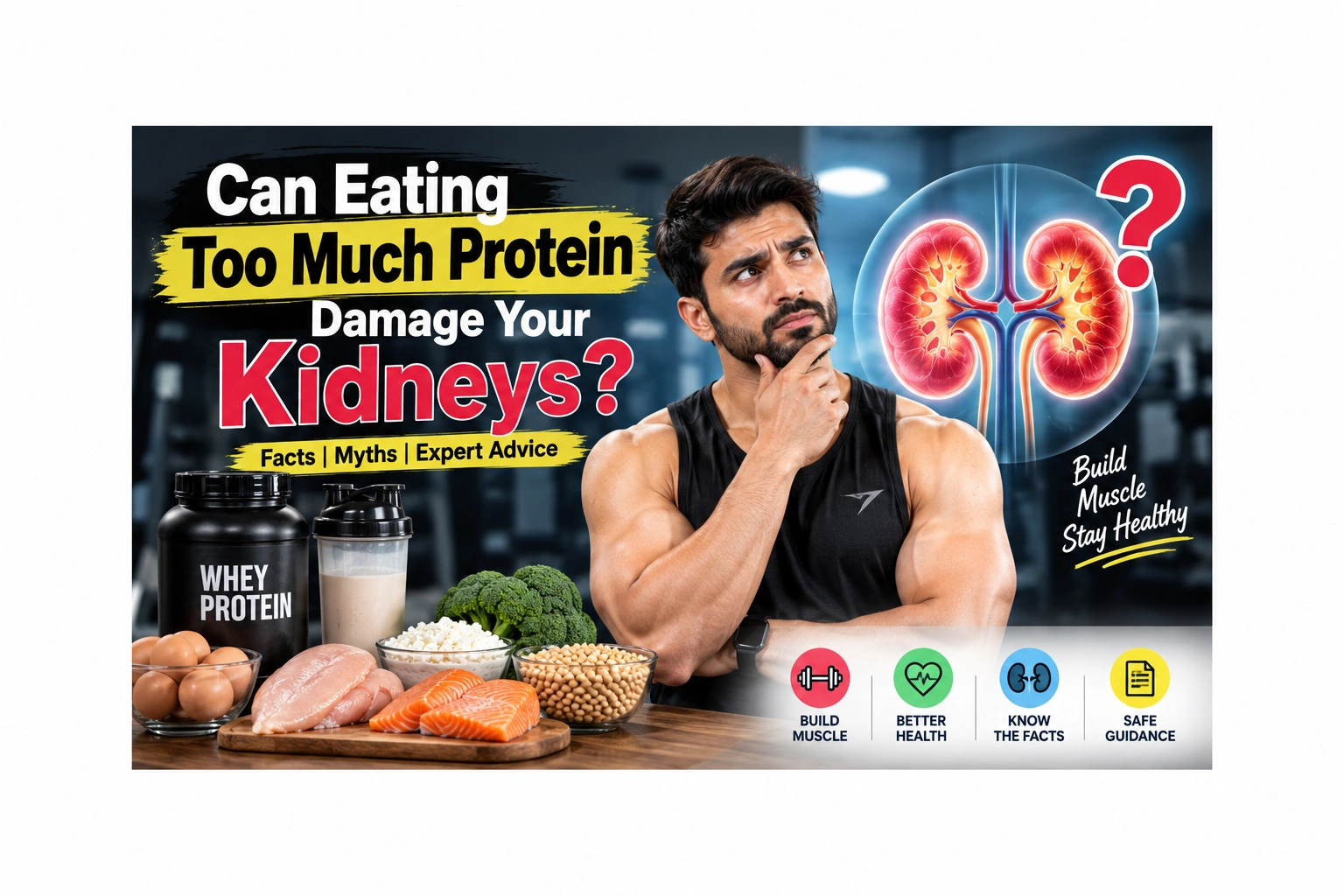
If you go to the gym, you have probably heard this question:
“Bhai, itna protein khayega toh kidney kharab nahi ho jayegi?”
This is one of the most common questions I hear from gym-goers, especially people who start eating more eggs, chicken, paneer, soy chunks or whey protein.
As a fitness coach, I have seen people make two opposite mistakes. Some people are scared of protein and don’t eat enough. Others think that more protein automatically means more muscle and start taking very large amounts without understanding their actual needs.
So, what is the truth?
For healthy adults, higher protein intake within commonly studied ranges has not been shown to damage normal kidney function. Research in healthy adults has generally not found adverse effects on kidney function, although long-term evidence at very high intakes is still limited.
However, the situation is different if someone already has chronic kidney disease or another kidney problem. In that situation, protein intake may need to be adjusted with guidance from a doctor or dietitian.
Let’s understand this in simple language.
Why Does Your Body Need Protein?
Protein is one of the most important nutrients for your body.
It helps your body:
- Build and repair muscle
- Maintain tissues
- Make enzymes and hormones
- Support the immune system
- Recover after exercise
- Maintain muscle during weight loss
When you train with weights, your muscles experience stress. Your body then needs nutrients, including protein, to support recovery and adaptation.
This is why protein is important for people who do:
- Strength training
- Bodybuilding
- Personal training
- Weight-loss workouts
- Sports
- Regular gym workouts
But remember:
Protein is important. More protein is not always better.
What Happens to Protein After You Eat It?
Your body breaks protein down into smaller components that can be used by the body.
Protein metabolism also produces waste products.
Your kidneys help remove waste from your blood.
This is where the kidney myth comes from.
People hear:
“Protein creates more waste, so the kidneys have to work harder.”
There is some truth in the second part: protein intake can increase the amount of work the kidneys do to process and remove nitrogen-containing waste.
But working harder does not automatically mean the kidneys are being damaged.
Research in healthy adults has not shown that higher protein intake within the studied ranges causes a decline in kidney function.
So, Can Protein Damage Healthy Kidneys?
For a healthy person, normal or moderately high protein intake is not automatically harmful to the kidneys.
A systematic review and meta-analysis of randomized trials in adults without kidney disease found that higher-protein diets did not adversely affect kidney function measured by changes in GFR.
More recent research published in 2026 also found that high-protein diets in adults without chronic kidney disease increased estimated GFR but did not produce consistent biochemical evidence of kidney injury. The researchers also noted that many studies were relatively short, so the long-term effects of very high protein intake remain uncertain.
This is an important point.
We should not say that unlimited protein is safe.
The evidence supports reasonable higher-protein diets in healthy adults, not unlimited amounts for years.
What If You Already Have Kidney Disease?
This is where you need to be careful.
If someone has chronic kidney disease, the advice can be completely different.
The kidneys may not remove waste from protein metabolism as effectively. Because of this, healthcare professionals may recommend a specific protein intake depending on the person’s condition.
The National Institute of Diabetes and Digestive and Kidney Diseases says people with CKD may need to consume moderate amounts of protein and should work with a healthcare professional or dietitian to find the right amount.
So if you have:
- Chronic kidney disease
- Reduced kidney function
- Kidney failure
- Certain kidney-related medical conditions
- A history of kidney problems
Don’t copy the protein intake of a bodybuilder or fitness influencer.
Get individual advice from your doctor or registered dietitian.
Does Whey Protein Damage Your Kidneys?
This is another big gym question.
Whey protein is simply a concentrated source of protein made from milk.
For a healthy person, using whey protein as part of a sensible diet is not automatically harmful to the kidneys.
The important question is not:
“Is whey protein dangerous?”
The better question is:
“How much total protein am I eating from my entire diet?”
For example, if your daily protein comes from:
- Eggs
- Chicken
- Dal
- Paneer
- Milk
- Curd
- Soy
- Whey protein
You should consider the total amount, not just the whey shake.
A whey shake is not magic. It simply helps you conveniently add protein to your diet.
What About Soy Chunks?
Soy chunks are another common gym food.
They contain a good amount of protein and can be useful for people who want plant-based protein.
Some gym-goers worry about soy because of its isoflavones and claims about hormones. But normal soy consumption has not been shown to meaningfully change testosterone or estrogen levels in men in clinical research.
For kidney health, the bigger question is still your overall protein intake and individual health, rather than simply whether your protein came from soy.
How Much Protein Do You Actually Need?
This is where many gym-goers make a mistake.
They hear:
“Protein builds muscle.”
Then they think:
“If 100 grams is good, 200 grams must be better.”
Not necessarily.
Your protein needs depend on:
- Body weight
- Training level
- Age
- Fitness goal
- Total calorie intake
- Muscle-building goal
- Weight-loss goal
- Overall diet
A person who weighs 60 kg does not automatically need the same amount as someone weighing 100 kg.
And someone who trains three times a week may have different needs from a competitive athlete.
Instead of blindly copying someone else’s diet, calculate your needs based on your own body and goals.
More Protein Does Not Mean More Muscle Automatically
This is something I tell my clients regularly.
Muscle growth requires more than protein.
You also need:
1. Progressive Training
Your muscles need a reason to adapt.
2. Enough Calories
If you are trying to build muscle, eating too little can make progress difficult.
3. Enough Protein
Protein provides the building blocks needed for muscle repair and growth.
4. Good Sleep
Recovery doesn’t stop when you leave the gym.
5. Consistency
One excellent workout cannot replace months of regular training.
So don’t spend all your attention on protein while ignoring training, sleep and recovery.
Signs That You Should Not Ignore
Don’t diagnose kidney problems based on how you feel after eating protein.
Kidney disease can sometimes have few or no obvious symptoms in the early stages.
If you already have a kidney condition or your doctor has told you that your kidney function is abnormal, get professional advice before starting a high-protein diet.
A healthcare professional can use appropriate tests and your medical history to determine whether your protein intake needs to change.
What About Drinking More Water With High Protein?
You will often hear:
“If you eat high protein, drink 5 or 6 litres of water.”
There is no universal water target like that for everyone.
Your fluid needs depend on your body size, climate, activity, sweat loss, diet and medical conditions.
If you’re training in Chandigarh’s heat and sweating heavily, your fluid needs may be different from someone sitting indoors all day.
The goal is sensible hydration, not forcing huge amounts of water.
If you have kidney, heart or other medical conditions that affect fluid intake, follow your healthcare professional’s advice.
Common Protein Mistakes I See in the Gym
Mistake 1: Copying a professional athlete’s diet
Your body, training and goals may be completely different.
Mistake 2: Counting only whey protein
Remember your eggs, chicken, paneer, milk, dal, soy and other foods.
Mistake 3: Thinking protein replaces a balanced diet
Your body also needs carbohydrates, fats, vitamins, minerals and fibre.
Mistake 4: Taking multiple supplements unnecessarily
More supplements don’t automatically mean better results.
Mistake 5: Ignoring existing health problems
If you have kidney disease, don’t follow a high-protein gym diet without professional guidance.
Protein and Weight Loss
Protein can also be useful during fat loss.
A higher-protein diet can help you maintain muscle while you are trying to lose body fat, particularly when combined with resistance training.
But protein itself doesn’t magically burn belly fat.
For fat loss, your overall calorie intake matters.
A simple approach is:
Balanced diet + adequate protein + strength training + regular activity + good sleep = sustainable progress.
My Advice as a Coach
After years of working with gym-goers, my biggest advice is simple:
Stop looking for the maximum amount of protein you can eat.
Instead, find the right amount for your body, training and goal.
If you are healthy and training regularly, you don’t need to be afraid of protein simply because someone told you that protein automatically damages kidneys.
At the same time, don’t assume that extremely high protein intake is automatically better or completely risk-free forever.
And if you have kidney disease or abnormal kidney tests, your situation is different. Follow individualized medical advice.
Frequently Asked Questions
1. Can eating too much protein damage your kidneys?
In healthy adults, research has not shown that higher protein diets within commonly studied ranges cause kidney damage. However, evidence on extremely high intake over very long periods is limited.
2. Is whey protein bad for your kidneys?
For healthy people, whey protein is not automatically harmful to the kidneys. What matters is your total protein intake and your individual health.
3. Can gym-goers eat a high-protein diet?
Healthy gym-goers can often include higher protein in their diet. The amount should be appropriate for their body size, training and goals rather than copied from another person.
4. Does protein make the kidneys work harder?
Protein metabolism produces waste that the kidneys remove. Higher protein intake can increase kidney filtration, but this does not automatically mean kidney damage in healthy adults.
5. Should people with kidney disease eat a lot of protein?
Not without medical guidance. People with chronic kidney disease may need a specific protein intake based on their condition.
6. Can I take whey protein if I have kidney disease?
Don’t make that decision yourself. Speak with your doctor or renal dietitian because protein requirements vary with the type and stage of kidney disease.
7. Are soy chunks safe as a protein source?
Soy foods can be a useful protein source. For men, current evidence does not support the common claim that normal soy intake causes major changes in testosterone or estrogen.
8. Is more protein always better for muscle growth?
No. Muscle growth also requires progressive resistance training, sufficient calories, recovery and sleep. Increasing protein beyond your needs does not guarantee additional muscle growth.
9. Should I take protein supplements if I already eat enough protein?
Not necessarily. A supplement is mainly a convenient way to add protein. If your normal diet already provides enough, you may not need one.
10. What is more important than taking protein supplements?
Your complete routine matters more: training, total diet, adequate protein, sleep, recovery and consistency.
11. Can high protein cause kidney stones?
The relationship between protein intake and kidney stones is more complicated than the common gym claim. Research has not established a simple rule that protein automatically causes kidney stones in healthy people. Individual risk factors matter.
12. What should I do if I am worried about my kidneys?
If you have symptoms, a known kidney condition, abnormal kidney tests, or other risk factors, speak with a healthcare professional. Don’t try to diagnose kidney health from your protein intake alone.
Final Takeaway
Protein is not the enemy.
For healthy adults, eating a sensible higher-protein diet for fitness has not been shown to damage normal kidney function in the available research. But more is not always better, and the long-term effects of extremely high protein intake are less certain.
If you have kidney disease, your protein needs may be different and should be decided with professional guidance.
So instead of asking:
“How much protein can I eat?”
Ask:
“How much protein do I actually need for my body and my goal?”
That is the approach I would recommend to any gym-goer who wants to build muscle, lose fat and stay healthy for the long term.
Leave a Reply