
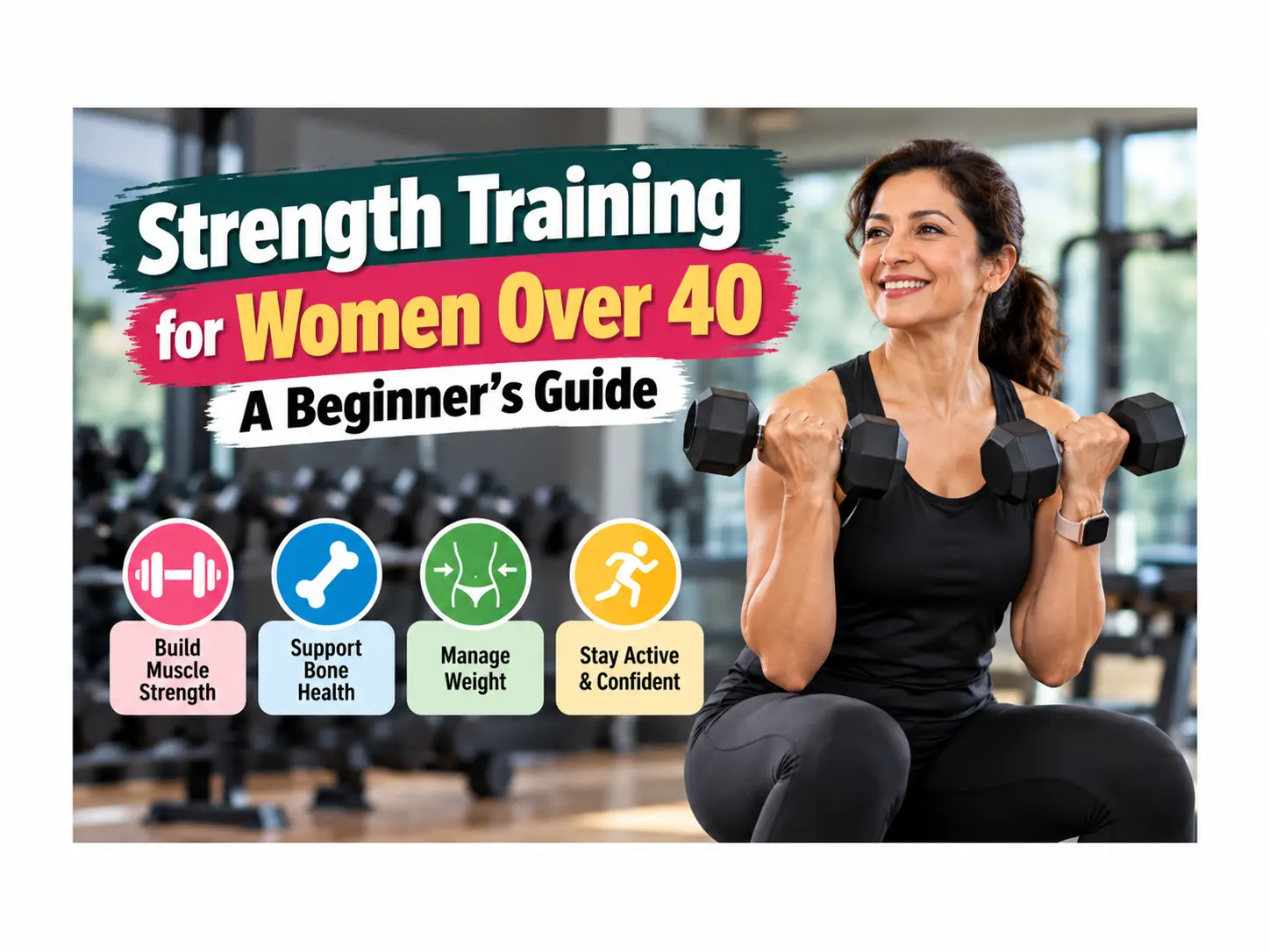
Strength training is one of the best ways for women over 40 to stay strong, active, and healthy. As women get older, they may notice changes in muscle strength, body weight, energy levels, and bone health. Hormonal changes during perimenopause and menopause can also affect how the body feels and responds to exercise.
The good news is that you can start strength training at any age, even if you have never lifted weights before. You do not need to lift very heavy weights or spend hours in the gym to see progress. With the right exercises, good technique, and regular practice, you can build strength and improve your fitness.
In this beginner’s guide, we will explain the benefits of strength training for women over 40, the best exercises to start with, how often to train, and how to get better results safely.
1. What Is Strength Training?
Strength training is a type of exercise that makes your muscles work against resistance. This resistance can come from dumbbells, gym machines, resistance bands, or your own body weight.
Common examples include:
- Squats
- Wall push-ups
- Dumbbell rows
- Glute bridges
- Lunges
- Leg presses
- Shoulder presses
The goal is to make your muscles stronger over time. You can start with light weights and increase the difficulty slowly as your strength improves.
Strength training is not only for young people or professional athletes. It is useful for women of all ages and fitness levels.
2. Why Is Strength Training Important for Women Over 40?
After the age of 40, maintaining muscle strength becomes increasingly important. Ageing, reduced physical activity, and hormonal changes can affect muscle mass and bone health.
Here are some important benefits of regular strength training.
Helps Maintain Muscle Mass
Muscle strength can decrease with age, especially when you do not exercise regularly. Strength training helps maintain muscle and can build more muscle when combined with proper nutrition and recovery.
Stronger muscles also make everyday activities easier, such as carrying shopping bags, climbing stairs, and lifting household items.
Supports Bone Health
Women may experience faster bone loss around menopause because of changes in oestrogen levels. Weight-bearing exercise and resistance training can help support bone strength.
However, women with osteoporosis or a history of fractures may need exercises specially selected by a qualified professional.
Helps Manage Body Weight
Strength training helps build or maintain muscle. Your body uses energy throughout the day, and muscle tissue contributes to your overall energy needs.
For fat loss, strength training works best with a balanced diet, regular physical activity, and a suitable calorie intake. It cannot remove fat from one specific area, such as the stomach.
Improves Balance and Everyday Movement
Exercises that strengthen your legs, hips, back, and core can help you move with more control. This can make standing up from a chair, walking, and climbing stairs easier.
Balance exercises are also helpful, especially as you get older.
Supports Mental Well-Being
Exercise can help improve mood, reduce stress, and support better sleep. Many women also feel more confident when they notice improvements in their strength and daily activities.
3. Best Strength Training Exercises for Women Over 40
If you are a beginner, start with simple exercises that you can perform with good technique. You do not need to use heavy weights on your first day.


1. Chair Squats
Chair squats strengthen your thighs, hips, and glutes.
How to do them:
- Stand in front of a stable chair with your feet about shoulder-width apart.
- Push your hips back and bend your knees slowly.
- Lower yourself towards the chair with control.
- Stand up again without using momentum.
Start with 8–10 repetitions. Use the chair for support if needed.
2. Wall Push-Ups
Wall push-ups work your chest, shoulders, and arms.
How to do them:
- Stand facing a wall and place your hands against it.
- Keep your body straight.
- Bend your elbows and move your chest towards the wall.
- Push yourself back to the starting position.
Try 8–12 repetitions. As you become stronger, you can progress to push-ups against a bench.
3. Glute Bridges
Glute bridges strengthen your glutes and help train the muscles around your hips.
How to do them:
- Lie on your back with your knees bent and feet flat on the floor.
- Keep your arms beside your body.
- Lift your hips gently while squeezing your glutes.
- Lower your hips slowly.
Start with 10–12 repetitions.
4. Seated Rows
Seated rows strengthen your back and help improve pulling strength.
Use a gym machine or resistance band. Keep your back comfortable and pull with control rather than jerking the weight.
Try 8–12 repetitions with a light resistance.
5. Leg Press
The leg press machine works the thighs and glutes. It can be useful for beginners because the machine supports your body during the movement.
Start with a light weight, keep your back against the seat, and avoid locking your knees. Ask a qualified trainer to show you the correct setup.
6. Light Dumbbell Shoulder Press
This exercise strengthens your shoulders and arms.
Use light dumbbells and press them upwards only through a comfortable range of motion. If you have shoulder pain or difficulty lifting your arms, choose an alternative exercise with professional guidance.
4. How Often Should Women Over 40 Do Strength Training?
For most healthy beginners, two strength-training sessions per week are a good starting point. Try to leave a rest day between sessions so your muscles have time to recover.
You can gradually increase your training as you become more comfortable.
A simple weekly routine could look like this:
| Day | Activity |
|---|---|
| Monday | Full-body strength training |
| Tuesday | Walking or light cycling |
| Wednesday | Rest or gentle stretching |
| Thursday | Full-body strength training |
| Friday | Walking or balance exercises |
| Saturday | Enjoyable physical activity |
| Sunday | Rest or gentle movement |
Adults should generally aim for at least 150 minutes of moderate-intensity aerobic activity each week, along with muscle-strengthening activities on at least two days, according to standard physical activity guidelines.
If you are currently inactive, start with a manageable amount and build up gradually.
5. How Heavy Should Women Over 40 Lift?
There is no single weight that is right for every woman. The correct starting weight depends on your strength, experience, health, and the exercise you are doing.
Choose a weight that allows you to perform the exercise with good technique. The last few repetitions should feel challenging, but you should still be able to control the movement.
For beginners, a simple approach is:
- Start with 1–2 sets per exercise.
- Aim for around 8–12 repetitions when comfortable.
- Rest between sets as needed.
- Increase the weight gradually when the exercise becomes easy.
- Stop if you experience sharp pain, dizziness, or unusual symptoms.
Do not compare your weights with another person’s. Your goal is to improve your own strength safely.
6. Nutrition Tips for Women Over 40
Exercise is important, but your body also needs good nutrition to recover and become stronger.
Eat Enough Protein
Protein supports muscle repair and growth. Include protein-rich foods in your daily meals, such as:
- Eggs
- Milk and curd
- Paneer
- Dal and beans
- Soy foods and tofu
- Chicken and fish, if you eat them
Your protein needs depend on your body weight, activity level, and health. A registered dietitian can help you decide how much is suitable for you.
Include Calcium-Rich Foods
Calcium is important for bone health. Milk, curd, paneer, and suitable fortified foods can help you meet your needs. Some leafy vegetables and other foods also provide calcium.
Vitamin D supports calcium absorption. Ask your healthcare professional whether you need a supplement or testing.
Drink Enough Water
Drink water regularly throughout the day, especially during exercise and in hot weather. Do not wait until you feel very thirsty.
Avoid Extreme Diets
Eating too little can make it harder to recover and maintain muscle. If your goal is weight loss, choose a balanced eating plan that you can follow over time rather than a very restrictive diet.
7. Common Strength Training Mistakes to Avoid
Women who are new to strength training sometimes make mistakes that slow their progress.
Lifting too heavy too soon: Start with a manageable weight and learn the movement first.
Skipping warm-ups: Spend a few minutes walking or cycling gently, then practise the movements without heavy resistance.
Training every day without recovery: Muscles need time to recover. More exercise is not always better.
Ignoring technique: Correct technique is more important than lifting a heavy weight. Ask a qualified trainer for help if you are unsure.
Expecting quick results: Strength and fitness improve gradually. Focus on consistency rather than looking for changes after every workout.
Avoiding weights because of age: Being over 40 does not mean you should avoid resistance training. The right exercise plan can be adapted to your ability and health needs.
8. Is Gym Training Safe for Women Over 40?
For many healthy women, strength training is safe and beneficial when performed with appropriate technique and gradual progression.
However, speak with a healthcare professional before starting if you have a significant medical condition, osteoporosis, a history of fractures, uncontrolled blood pressure, recent surgery, or an injury that affects movement.
If you experience chest pain, faintness, severe breathlessness, or sudden unusual symptoms during exercise, stop and seek appropriate medical care.
A qualified gym trainer can help you learn how to use equipment, select suitable exercises, and develop a routine based on your fitness level.
At Bodyzone Fitness & Spa in Sector 9C, Chandigarh, women can explore strength training and guided workout options to help them work towards their individual fitness goals. Choose a programme that suits your experience, schedule, and comfort level.
9. How Long Does It Take to See Results?
Results depend on your starting fitness level, exercise routine, nutrition, sleep, and consistency.
Some beginners notice that daily activities feel easier within a few weeks. Measurable improvements in strength may develop over several weeks of regular training. Changes in muscle size and body composition can take longer.
You do not need to depend only on the weighing scale. You can also track:
- The weights you lift
- How many repetitions you complete
- How easily you climb stairs
- Your energy during daily activities
- Improvements in balance and movement
Small improvements are still progress. Give yourself time to learn and grow stronger.
Conclusion
Strength training for women over 40 is a practical way to maintain muscle, support bone health, improve everyday movement, and build confidence. You do not need to be fit before you start, and you do not need to lift very heavy weights.
Begin with simple exercises, train about twice a week, eat balanced meals, and give your body enough time to recover. Increase the difficulty slowly as your strength improves.
The best workout is one that is safe, suits your ability, and helps you stay consistent. Starting today can help you build strength for the years ahead.
Frequently Asked Questions (FAQs)
1. Is strength training good for women over 40?
Yes. Strength training can help women over 40 maintain muscle, improve strength, support bone health, and make daily activities easier. Exercises should match your fitness level and health needs.
2. Can women over 40 build muscle?
Yes. Women can build muscle after 40 with regular resistance training, suitable nutrition, enough protein, and proper recovery. Progress may vary from person to person.
3. How many days a week should a woman over 40 lift weights?
Two days per week is a good starting point for most beginners. As your strength and recovery improve, you may adjust your routine with guidance from a qualified trainer.
4. Should women over 40 lift heavy weights?
Not necessarily. Beginners should start with manageable weights and focus on good technique. You can gradually increase the resistance as you become stronger.
5. Can strength training help women over 40 lose belly fat?
Strength training can help maintain muscle during overall fat loss. However, it cannot target belly fat alone. A balanced diet, regular activity, and consistent exercise are important.
6. Is it too late to start strength training at 45 or 50?
No. You can begin strength training at 45, 50, or later. Start at a suitable level, learn correct technique, and progress gradually.
7. What should women over 40 eat after a workout?
A balanced meal containing protein and carbohydrates is a good choice. Examples include eggs with whole-grain toast, curd with oats, paneer with roti, or dal with rice.
8. Is walking enough for women over 40?
Walking supports heart health and general fitness, but it does not fully replace muscle-strengthening exercise. Combining walking with strength training offers a more complete routine.
9. Can women with menopause do strength training?
Many women can continue or begin strength training during perimenopause and menopause. It may help maintain muscle and support bone health. Women with medical concerns should seek personalised guidance.
10. What is the best strength-training exercise for beginners over 40?
There is no single best exercise for everyone. Chair squats, wall push-ups, glute bridges, resistance-band rows, and suitable gym-machine exercises are useful starting options.
Leave a Reply